
Airtight vs Vacuum-Sealed: What the Terms Mean
An airtight container closes out most air; a vacuum bag removes it. Neither one makes food safe, and vacuum sealing adds a botulism concern for some foods.
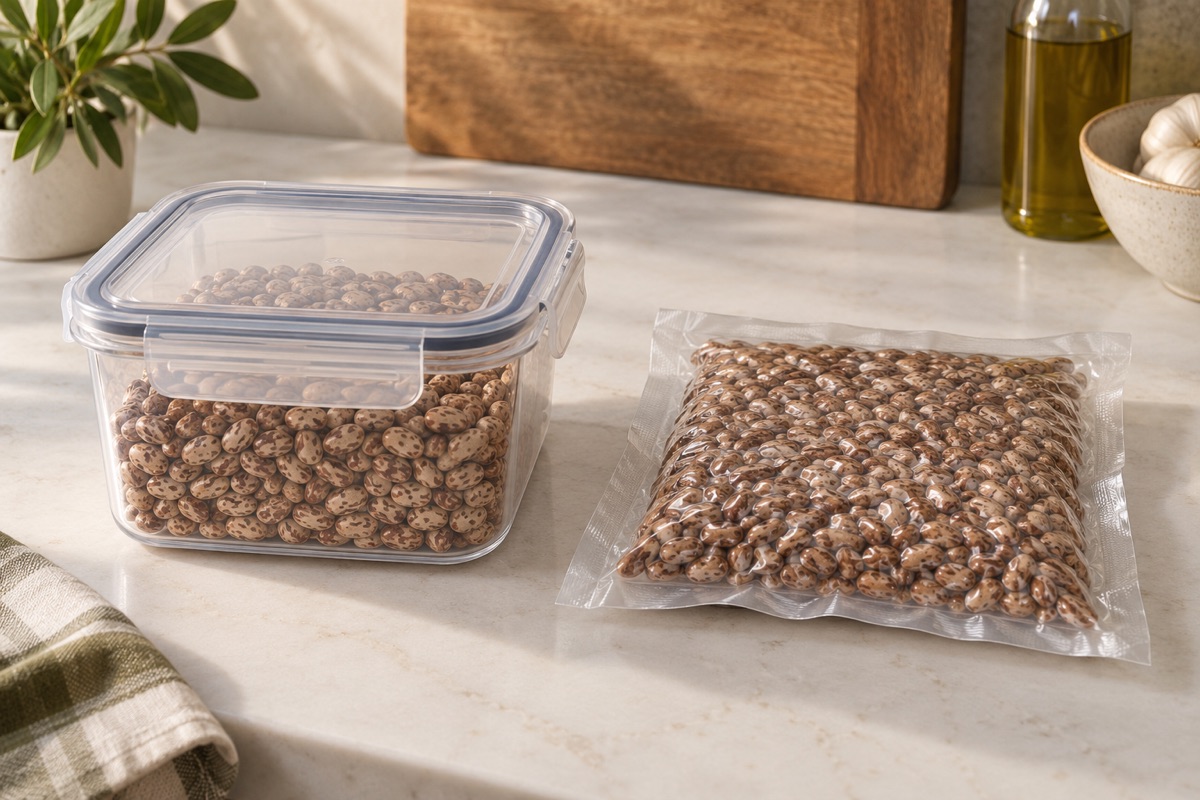
An airtight container keeps most outside air out and can be reused. A vacuum-sealed bag has air pumped out before it is heat-sealed shut. Both slow some kinds of quality loss, such as stale flavor, rancid fats and freezer burn. Neither one makes food safe, and neither is a substitute for refrigeration, freezing or proper canning.
The sealing method tells you nothing about whether the food inside is safe to eat. This guide explains how the two differ, which foods suit each, and where vacuum sealing needs extra care. It applies to readers in the United States and was last reviewed on October 4, 2026.
What each term means
An airtight container, often with a gasket or locking lid, closes tightly enough to keep air movement to a minimum. There is still air inside when you close it. The word is used loosely, and a container sold as airtight can still be opened and closed many times, letting fresh air in.
A vacuum-sealed package, usually a plastic bag, has had the air removed before it is closed. UConn Extension explains that removing the air removes oxygen, which some microorganisms need to grow and which also drives oxidation that turns fats rancid and darkens color.
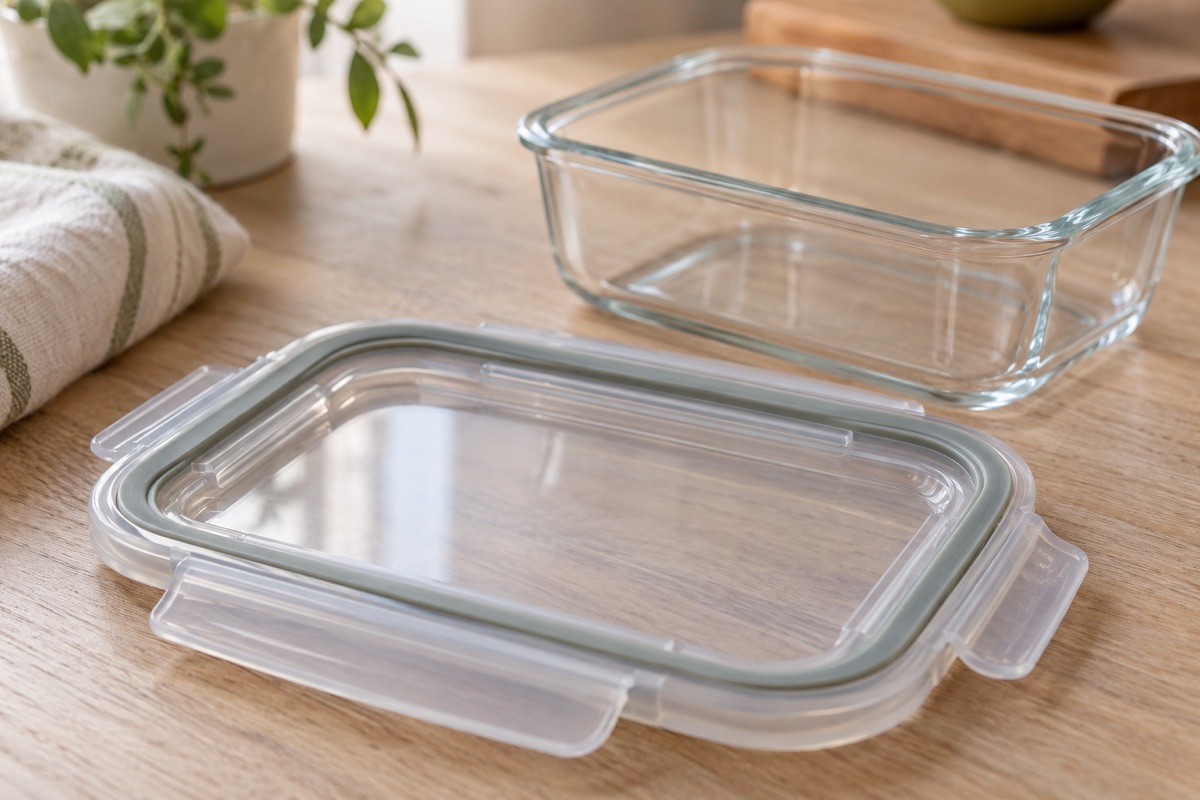
Here is how they compare:
| Airtight container | Vacuum-sealed bag | |
|---|---|---|
| Air inside | Some air remains | Most air removed before sealing |
| Reuse | Reusable | Bags are generally single-use (UConn Extension) |
| Fragile foods | Protects from crushing | Can crush soft items such as bread or soft fruit (UMaine Extension) |
| Needs a machine | No | A sealer or manual pump |
What neither one does
This is the main point of the comparison, so it comes before the details.
- Neither kills germs already in the food. UMaine Extension says vacuum sealing does not kill pathogens that may already be present in the food you seal.
- Neither replaces cold storage. The same extension service says vacuum sealing alone is not a method of food preservation and, unlike canning, does not make foods shelf stable. Perishable food still needs the refrigerator or freezer.
- Neither is a safety test. The CDC says you cannot see, smell or taste the toxin that causes botulism, so a sealed food that looks and smells fine has not been shown to be safe.
- Neither replaces canning. UConn Extension and N.C. Cooperative Extension both state that vacuum packing machines are not a substitute for heat processing of home-canned foods.
Why vacuum sealing has an extra caution
Some bacteria prefer an oxygen-free environment. UConn Extension names Clostridium botulinum, which causes botulism, and says it can grow in a vacuum package without any sign: the food can look, smell and taste normal. Botulism is most likely, UConn says, in low-acid, moist foods packaged in an air-free environment, and it gives vegetables and meats sealed on a kitchen table as examples. The CDC likewise says low-acid foods are commonly linked to botulism illness and outbreaks.
N.C. Cooperative Extension, summarizing guidance from the National Center for Home Food Preservation, says some harmful bacteria grow better and faster in vacuum-sealed products than in unsealed ones, and that such organisms may not change how the food looks.
In practice:
- Keep vacuum-sealed perishable food in the refrigerator or freezer. UConn Extension says perishable foods in a vacuum package must be refrigerated between 34 and 38°F or frozen at 0°F, and cannot be safely stored at room temperature.
- N.C. Cooperative Extension says vacuum-packaged perishable food should not be out of refrigeration longer than 2 hours total above 40°F.
- Thaw frozen vacuum-packed food carefully. UConn Extension suggests opening the package so some air enters when you take it out of the freezer, then thawing in the refrigerator. UMaine Extension says to remove frozen vacuum-sealed fish from its packaging before it thaws.
- A raw ingredient is still raw. Pathogens on raw chicken or unwashed produce are still there after sealing, so handle and cook them as you normally would.
Which food suits which method
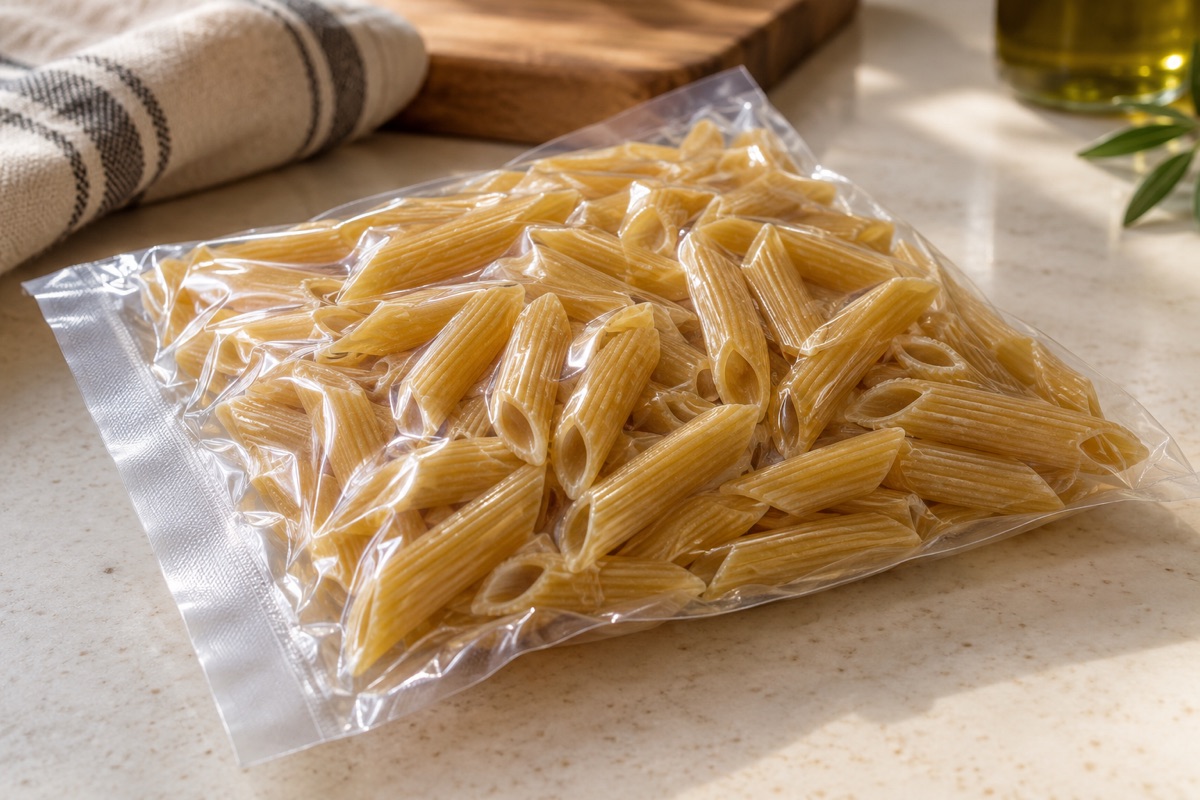
For dry pantry foods, UConn Extension says items such as crackers or rice can be kept in vacuum bags safely at room temperature, as can dehydrated foods like dried fruit, nuts and jerky, because they contain little moisture. N.C. Cooperative Extension says dry foods such as crackers, chips and nuts can be stored at room temperature and that airtight containers also keep them at high quality for a reasonable time. For these foods an airtight container is often enough, and it can be reused. Opened coffee is a good example of a dry food where air and light matter; see how to store coffee beans after opening.
In the freezer, removing air reduces dryness and freezer burn, UMaine Extension notes, and portions are easy to label. The caution is thawing, as above. A rigid container is gentler for soft foods. For a dry but delicate item such as homemade granola, an airtight container is usually the simpler choice.
Moist, low-acid foods are the group where sealing method matters most. UMaine Extension says anaerobic pathogens such as those that cause botulism can still be present in a reduced-oxygen package. Keep these cold and follow official time guidance. Cooked soups and similar foods call for refrigerator or freezer guidance, not sealing alone; see freezing soup in portions.
Store-bought packages
If a store-bought package says to keep it refrigerated or frozen, keep doing that and follow the label before any general advice. A sealed look is not a storage instruction. Some bags that look sealed, such as coffee bags, have a valve for a different reason: carbon dioxide has to escape. That is explained in why coffee bags have valves.
Common questions
Is vacuum sealing safer than an airtight container? Neither is safer in itself. A vacuum bag removes more oxygen, which helps some quality problems, but UConn Extension lists the oxygen-free setting as the reason botulism is a concern.
Does vacuum sealing let me skip the fridge? No, not for perishable food. See the temperatures above.
Do I need to buy a sealer? N.C. Cooperative Extension says a sealer is nice but may not be necessary: stored carefully, in airtight containers for crackers, nuts and other dry foods, you can get high-quality results. UConn Extension notes that reusable airtight jars or containers may be cheaper.
Can I tell by looking whether sealed food is safe? No. Texture, smell and flavor are never safety tests.
Official guidance and review date
This guide was reviewed on October 4, 2026 and applies to the United States. It draws on University of Connecticut Extension, University of Maine Cooperative Extension, N.C. Cooperative Extension and the Centers for Disease Control and Prevention. For refrigerator and freezer time and temperature charts, see the FoodSafety.gov cold food storage chart, linked in the food safety note below. Product labels take priority over general guidance.
Official guidance and sources
Sources last checked October 4, 2026.
- Is Home Vacuum Packaging a Safe Way to Preserve Food? , University of Connecticut Extension (accessed October 4, 2026) What vacuum packaging does, why botulism is the concern, refrigeration and thawing advice, and dry foods that suit it.
- Vacuum Sealing Safely at Home , University of Maine Cooperative Extension (accessed October 4, 2026) Vacuum sealing is not a preservation method on its own; fragile foods and thawing fish.
- Vacuum Packing , N.C. Cooperative Extension, Brunswick County Center (accessed October 4, 2026) Pros and cons of vacuum packing, summarizing National Center for Home Food Preservation guidance.
- Botulism Prevention , Centers for Disease Control and Prevention (accessed October 4, 2026) The toxin cannot be seen, smelled or tasted; low-acid foods are commonly linked to illness.