
Why Do Coffee Bags Have Valves?
The small round disc on a coffee bag lets carbon dioxide out so the bag does not swell. It does not keep coffee fresh forever, and it matters little once the bag is open.
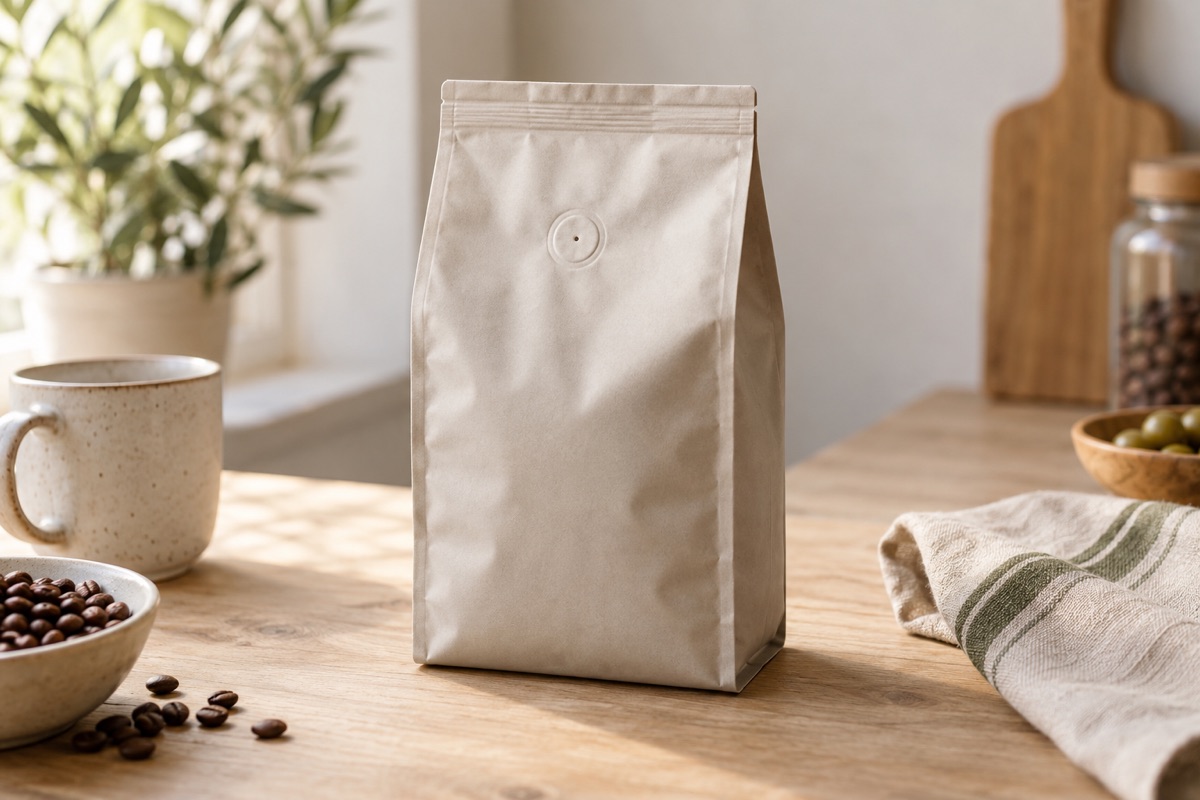
Freshly roasted coffee gives off carbon dioxide for weeks. A one-way valve lets that gas out so the bag does not swell and burst, while blocking air from flowing back in. It is a pressure-relief part, not a freshness guarantee, and it matters far less once you open the bag.
What you see on the package
Look near the top of many coffee bags and you may find a small round disc, often plastic, with a tiny opening or ring at the center. Designs differ between manufacturers, so this article describes the purpose rather than any one design.
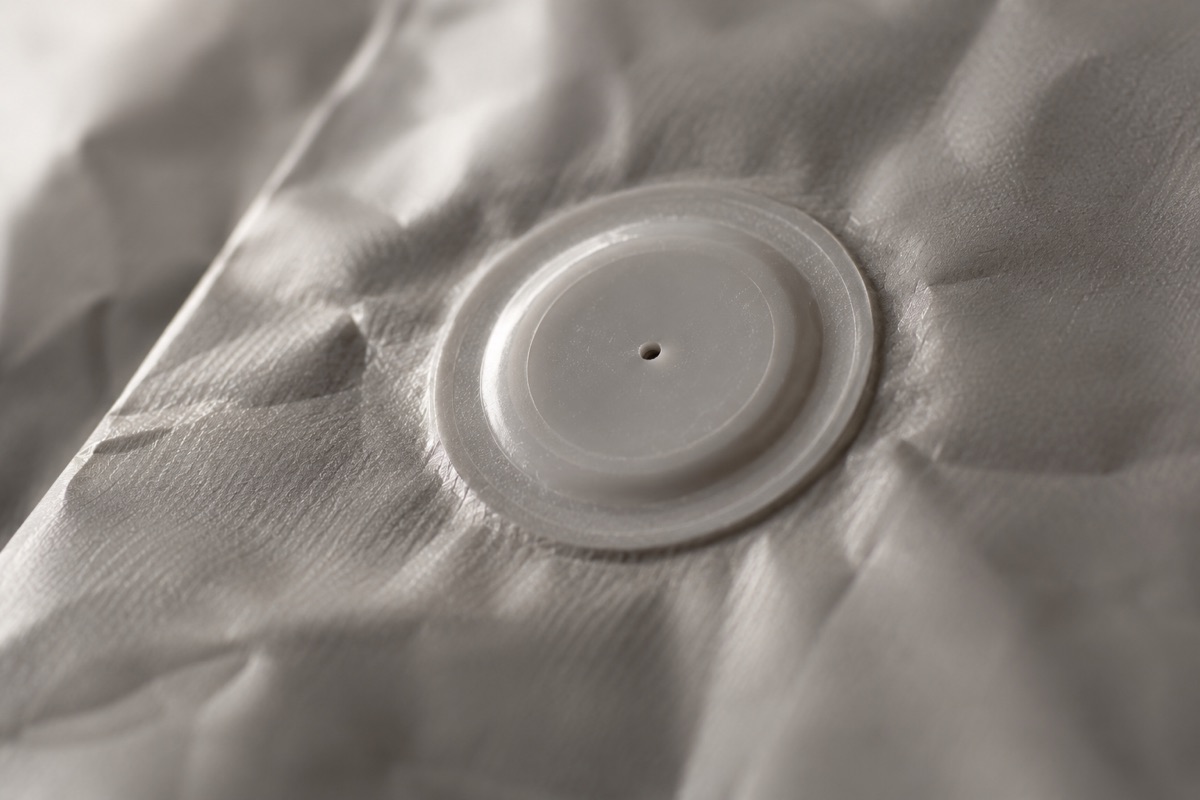
Gas leaves in one direction only, which is why it is called a one-way valve. Not every coffee bag has one. A valve on the package tells you the roaster expects gas to escape, and nothing more.
Why the gas is there
Roasting forms carbon dioxide inside the bean. A study from the Zurich University of Applied Sciences notes that roughly 1% of the weight of freshly roasted coffee is carbon dioxide, and that whole beans keep releasing it for about one month. The authors point out that this high gas output places requirements on packaging: the carbon dioxide needs to get out, while oxygen from the air is kept from getting in. The common solution, they write, is a one-way valve to prevent the package from inflating and bursting.
Gas release is a property of the coffee, so a sealed bag with no way out for the gas is under steady pressure. The valve is how a bag deals with that.
How it works
As gas builds up inside a sealed bag, the pressure inside becomes higher than the pressure outside. The valve opens a little to relieve that difference, then closes again so outside air cannot flow in freely. The exact mechanism depends on the valve design, which this article does not try to cover.
Packing methods go together with the valve. The beans in the Zurich study were packed under nitrogen, a gas that replaces air in the bag, in bags made from a foil laminate with an integrated one-way valve. How a roaster fills a bag with nitrogen, and why, is covered in nitrogen flushing in coffee packaging.
Compared under real conditions
Here is what the available research does and does not say. The Zurich study packed roasted Arabica beans under nitrogen in 1 kg valved bags, let them rest for three weeks to allow for initial degassing, and then compared storage methods after opening. Two points are relevant to valves.
Unopened bags were stable in that study. A marker of aroma loss stayed essentially level over the nine weeks, with only a slight downward trend. That is a measurement on one coffee in one type of bag, not a shelf-life promise.
Opened bags aged faster. The authors say that after a package has been opened, the protective atmosphere changes, accelerating the loss of freshness. All four ways of re-closing the opened package showed more change than the unopened reference.
On how much oxygen matters, a laboratory study from the University of Minnesota stored roasted and ground coffee at fixed oxygen levels, water activity and temperature. Raising oxygen from 0.5 to 21.3 kPa made the coffee deteriorate about 20 times faster. That tells you why a valve is designed to keep air out, but it was a controlled test on ground coffee, not on valves. This article cites no valve-specific leak rates because none of the sources it opened give them.
What a valve can and cannot do
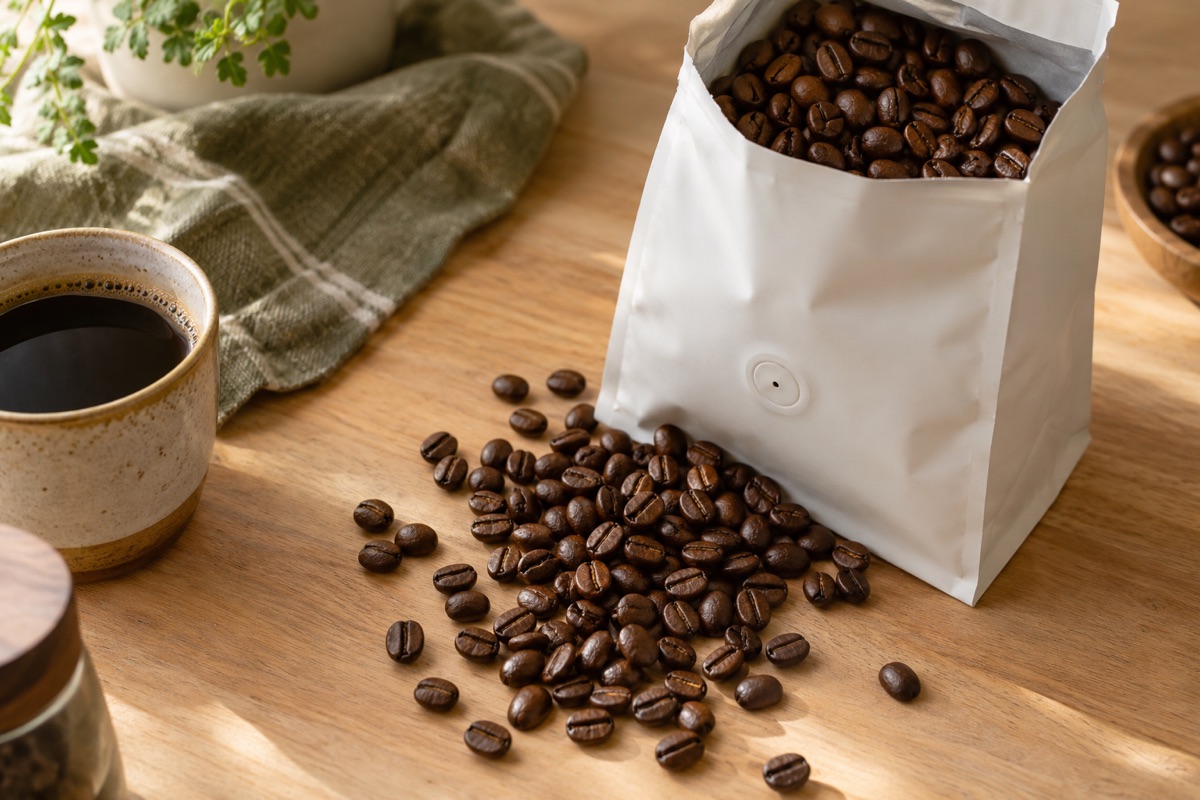
A valve lets carbon dioxide out of an unopened bag so it does not inflate and burst, and that lets a roaster pack beans that are still releasing gas.
It cannot keep coffee fresh forever. Coffee begins to lose freshness almost immediately after roasting, according to the National Coffee Association, and the study above found freshness falling after opening. It cannot protect coffee after you open the bag, because once the top is open, air reaches the beans directly whether or not the valve is still there. It cannot make a leaky bag airtight, since the seals and film matter as much as the valve. And it cannot tell you the coffee’s age, so check the roast date or best-by date on the label.
What it means at home
Before you open the bag, the valve is not something to fiddle with. Store the bag somewhere cool and dark and use it by the best-by date. The National Coffee Association says unopened packages stay fresh until the best-by date.
After you open the bag, ignore the valve and focus on how you close and store the beans. Ways to close an opened bag and the container options are compared in how to store coffee beans after opening.
If you are weighing other containers, airtight versus vacuum-sealed storage explains how they differ and why neither seal says anything about food safety. For roasted coffee, age mostly affects flavor. Moisture and mold are the practical risks to watch for.
Common questions
Does a valve mean the coffee is fresh? No. It shows the bag was designed to let gas out. Freshness depends on when the coffee was roasted, how it was packed and how it has been stored since, so look for a roast date or best-by date on the label.
Should I press the bag to let air out through the valve? None of the sources opened for this article recommend it. They describe the valve as a pressure-relief part, so there is no reason to handle it.
Is a bag with no valve worse? Not necessarily. A bag without a valve was simply designed differently, and what the roaster did before packing is not visible on the outside. The label’s date is a better guide than the presence of a valve.
Sources
- Effects of different coffee storage methods on coffee freshness after opening of packages , Food Packaging and Shelf Life (Zurich University of Applied Sciences) (accessed October 4, 2026) Open-access study; source for carbon dioxide release, the purpose of the one-way valve and the effect of opening a bag.
- Application of Weibull Hazard Analysis to the Determination of the Shelf Life of Roasted and Ground Coffee , LWT, University of Minnesota (Experts@Minnesota) (accessed October 4, 2026) Abstract used for the effect of oxygen on roasted and ground coffee under controlled laboratory conditions.
- Storage and shelf life , National Coffee Association (About Coffee) (accessed October 4, 2026) Coffee loses freshness soon after roasting; guidance on opened bags and best-by dates.