
How to Rinse Quinoa Without Losing It Down the Sink
Rinse quinoa in a fine-mesh strainer to wash off its bitter saponin coating. Here is why, how to do it without losing seeds, and when the package says you can skip it.
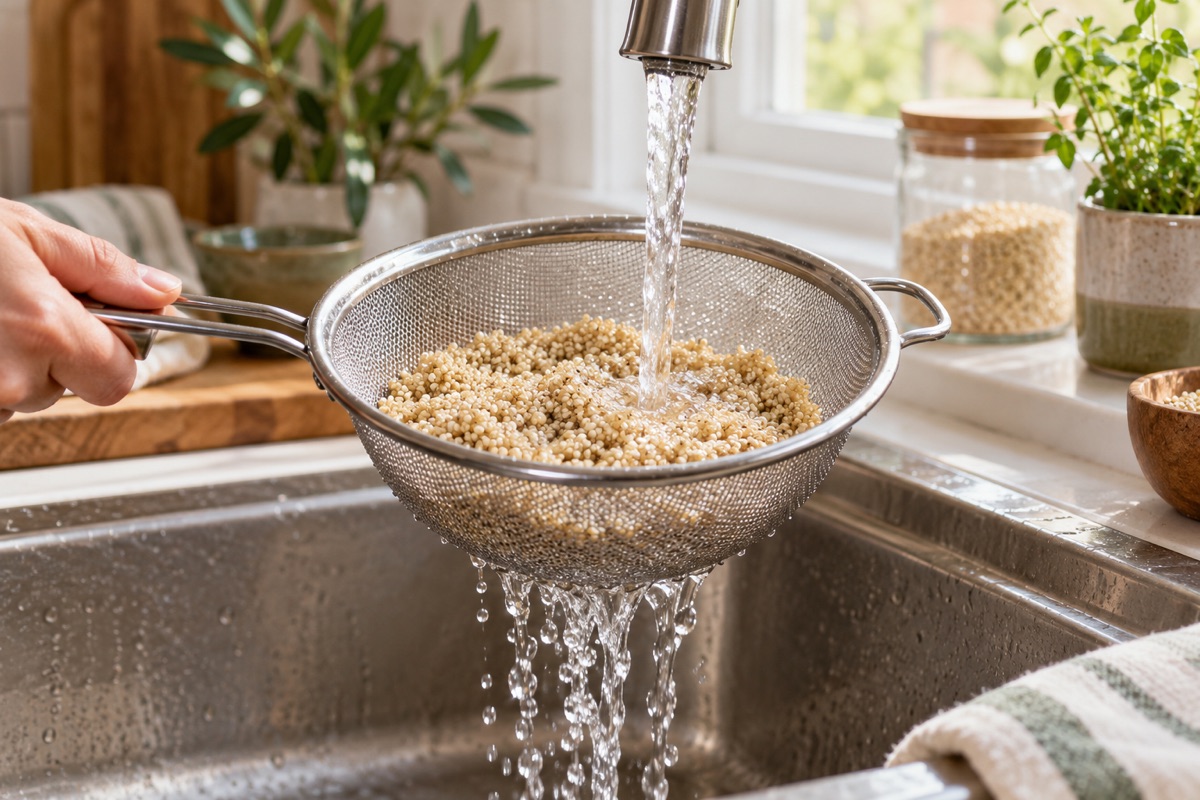
Rinse quinoa in a fine-mesh strainer under cool running water before you cook it. Quinoa seeds carry a natural coating called saponin, which tastes bitter and soapy, and rinsing washes most of it away. Some packages are already rinsed, so check the label first, and taste a little cooked quinoa if you are unsure.
What saponin is and why you rinse
Utah State University Extension says whole quinoa seeds need to be rinsed before cooking to remove the bitter saponin coating. Saponin sits on the outside of the seed. It is part of how the plant protects itself, and it gives unrinsed quinoa a bitter, slightly soapy edge.
The rinse water may look cloudy or foam a little. That can be the saponin. When the water runs mostly clear and the foam is gone, the seeds are usually ready to cook.
Rinsing does not change the type of quinoa or how it cooks. It just removes a flavor you probably do not want.
Check the package first
Packaging varies, and this is where people often get confused. If the label says “pre-rinsed,” “pre-washed,” or “ready to cook,” the maker has already done the rinsing, so a rinse at home may not be needed. If you rinse anyway, you lose little. If there is no rinsing statement, treat the quinoa as unrinsed and rinse it. The same goes for bulk bins and unlabeled bags, where there is no way to know. If the package gives rinsing instructions, follow them, whether they say to rinse or not.
If you cook pre-rinsed quinoa and it still tastes bitter, rinse it next time. The coating is not always removed completely during processing, and a short rinse costs almost nothing.
Product labels and package instructions take priority over general advice here.
Equipment
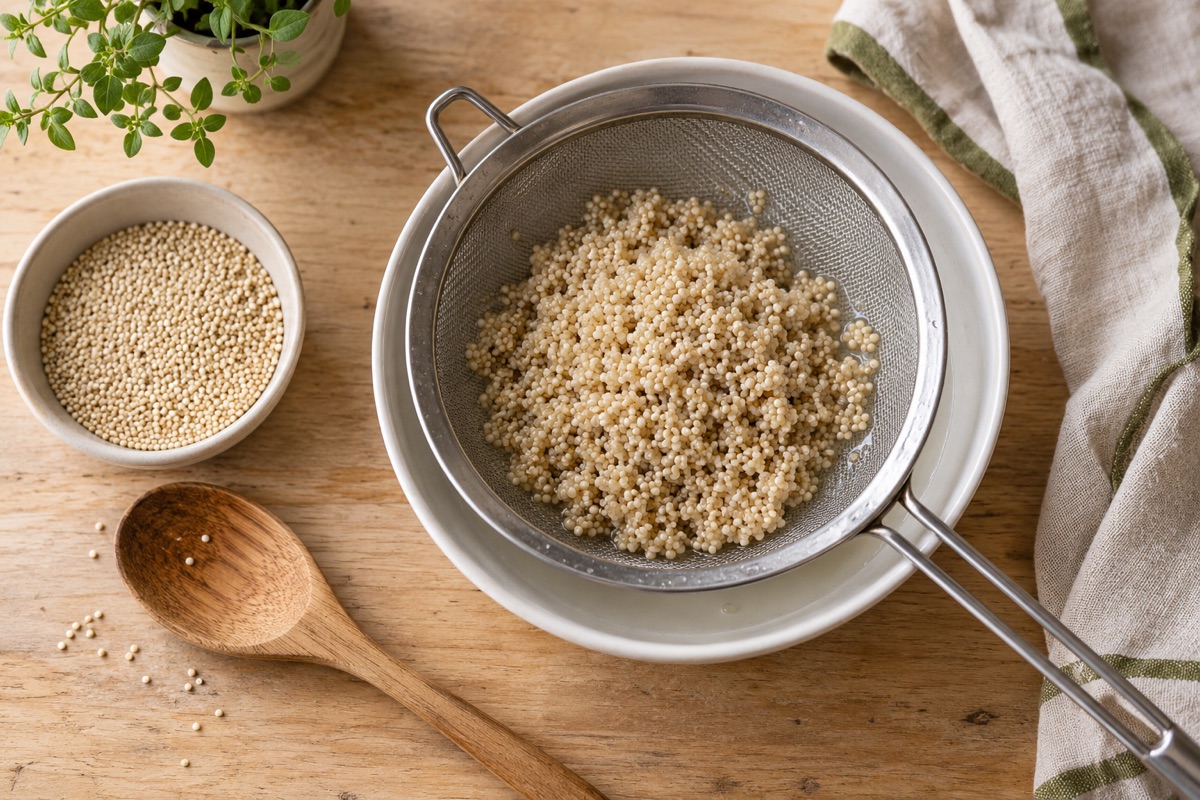
A fine-mesh strainer is the most useful tool, since quinoa seeds are small and fall through the holes of an ordinary colander. Choose one with a mesh tight enough to hold the seeds when you shake it.
A strainer with a handle or a hook that rests on the rim of a bowl keeps your hands free. A large bowl lets you rinse in standing water if you prefer that method. Cheesecloth or a clean, fine kitchen cloth can line a looser strainer.
How to rinse quinoa
Method 1: under running water
- Put the dry quinoa in the fine-mesh strainer.
- Hold it under a gentle stream of cool water. Do not blast it, since a hard stream can push seeds over the edge.
- Move the seeds around with your fingers or a spoon so that every part is rinsed.
- Continue until the water runs mostly clear, then shake the strainer and let it drain well.
Method 2: in a bowl
- Put the quinoa in a large bowl and cover it with cool water.
- Swish and rub the seeds gently between your fingers.
- Pour everything through the strainer. Repeat once more.
Home cooks commonly repeat the bowl rinse once or twice. The source we cite for this guide does not give a rinse time, so go by how the water looks.
If seeds escape
A few seeds will slip down the drain, and that is fine. To lose fewer, rinse over a bowl rather than directly over the sink so you can catch what falls through. If a lot is falling through, the mesh is too coarse, so use a finer one or line it with a cloth.
After rinsing
Drain the quinoa well. Wet quinoa carries extra water, which can throw off the liquid ratio if you follow a recipe exactly, so shake out as much as you can. Some cooks also toast the drained seeds in a dry pan for a few minutes to drive off moisture and add a nuttier flavor, though this is optional.
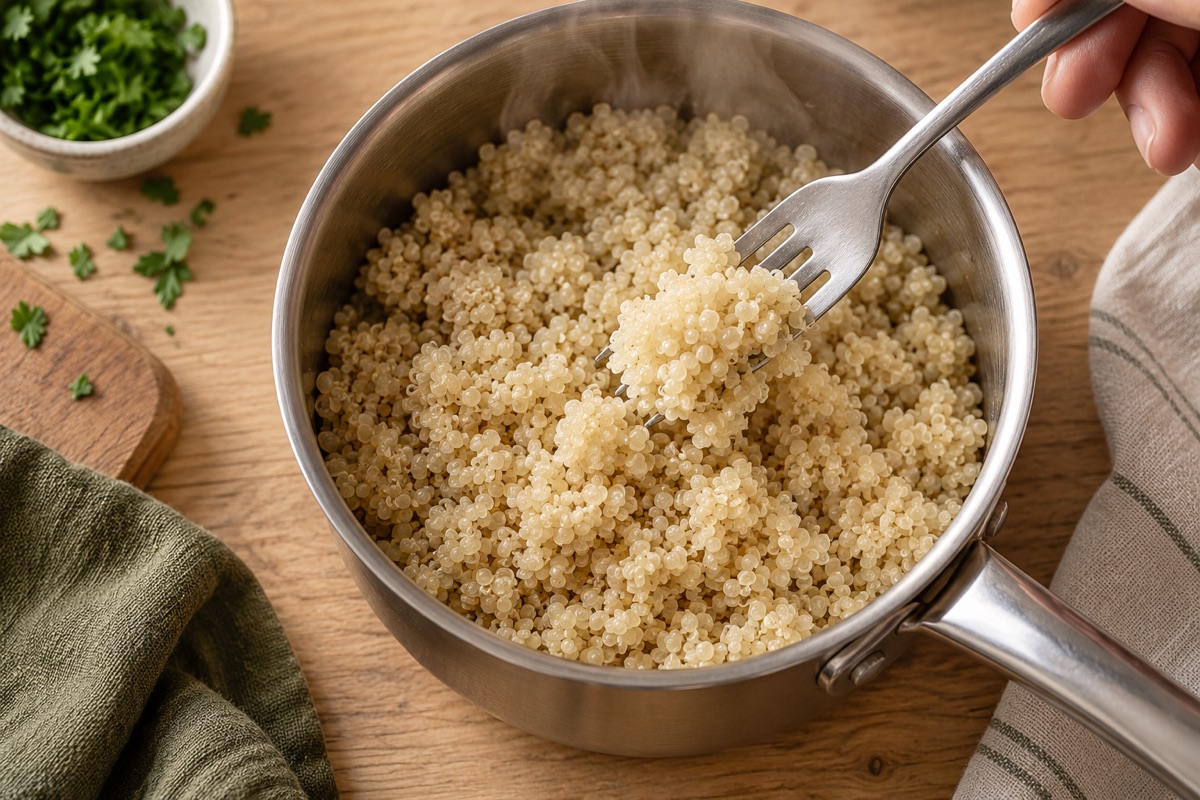
USU Extension notes that the cooking time is about 15 minutes, plus the time for rinsing. Cook it with the amount of water given in your recipe or on the package, then fluff with a fork. Properly cooked quinoa looks fluffy and the seeds show small spiral tails, which are the germ rings coming loose.
Troubleshooting
If the quinoa is still bitter or tastes soapy after cooking, the saponin was not fully removed. Rinse longer next time, or rinse and drain twice. Mushy quinoa means too much water or too long on the heat, so measure the liquid and keep the heat gentle. A gummy texture is often caused by stirring during cooking or by not draining the rinse water.
Using it next
Cooked quinoa works as a base for grain bowls and salads. A lemon tahini sauce is a good partner, and how to use tahini beyond hummus shows how to make one. For ideas about what to cook with what you have, see seasonal cooking for beginners.
Keep any uncooked quinoa dry in a sealed container. If you are deciding between containers or sealing methods for pantry foods, airtight vs vacuum-sealed storage explains how they differ.
Sources
- The Ultimate Guide to Quinoa , Utah State University Extension (accessed October 4, 2026) States that whole quinoa seeds need to be rinsed before cooking to remove the bitter saponin coating.