
How to Use Tahini Beyond Hummus
Tahini is ground sesame paste. Learn how to thin it into dressings and sauces, spread or drizzle it, bake with it, and what to know about sesame labeling.
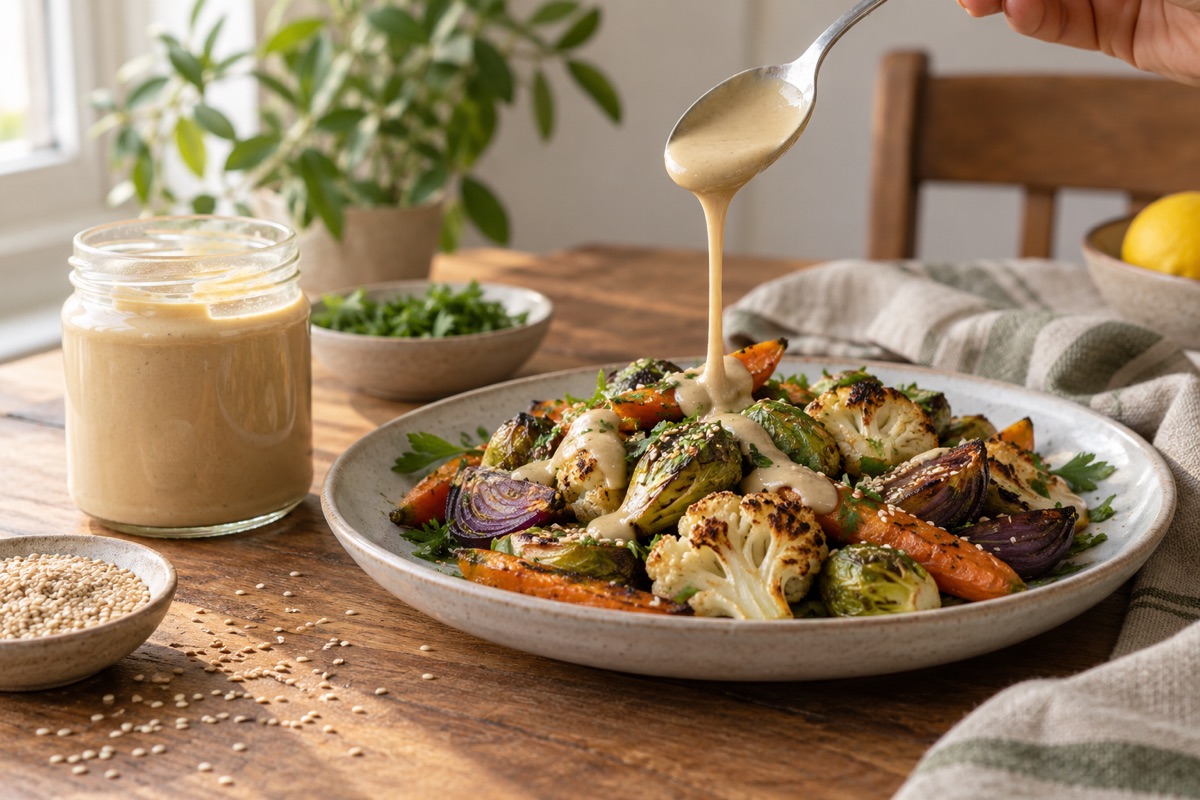
Tahini is a paste made from ground sesame seeds. It works as a thick, nutty sauce base, a drizzle, a spread and a partner for sweet ingredients, and hummus is only one of its uses. The simplest way to start is to thin it with lemon juice and water into a creamy sauce, then use that sauce on vegetables, grains, salads and roasted foods.
What it is
Tahini is sesame seeds ground into a smooth paste, sometimes with a little oil, sometimes only the seeds. Some jars use hulled seeds, which tend to taste milder, and others use unhulled seeds, which tend to taste more bitter and earthy. The label lists the ingredients, so read it if you want to compare brands.
Tahini is not the same as sesame oil, which is a liquid cooking and flavoring oil, or whole sesame seeds, which are usually a topping.
Stirring a jar
The oil in tahini rises to the top while the jar sits, and the solids settle underneath. Stir thoroughly before using, scraping up the thick layer from the bottom. Stirring the whole jar when you first open it makes it much easier to measure later. Follow the storage directions on the label, including whether the jar should be refrigerated after opening.
How to use it
Dressings and sauces
Thinned tahini is the most useful form. Whisk tahini with lemon juice and a splash of cold water, and it first thickens, then loosens into a pale, creamy sauce. Add water a little at a time until it pours. A small crushed garlic clove and some salt turn it into a classic sauce for roasted vegetables, grain bowls, falafel, grilled meat or flatbread.
As a rule of thumb, start with equal parts tahini and lemon juice, then add water to taste. Tahini brands differ in thickness, so treat that as a starting point.
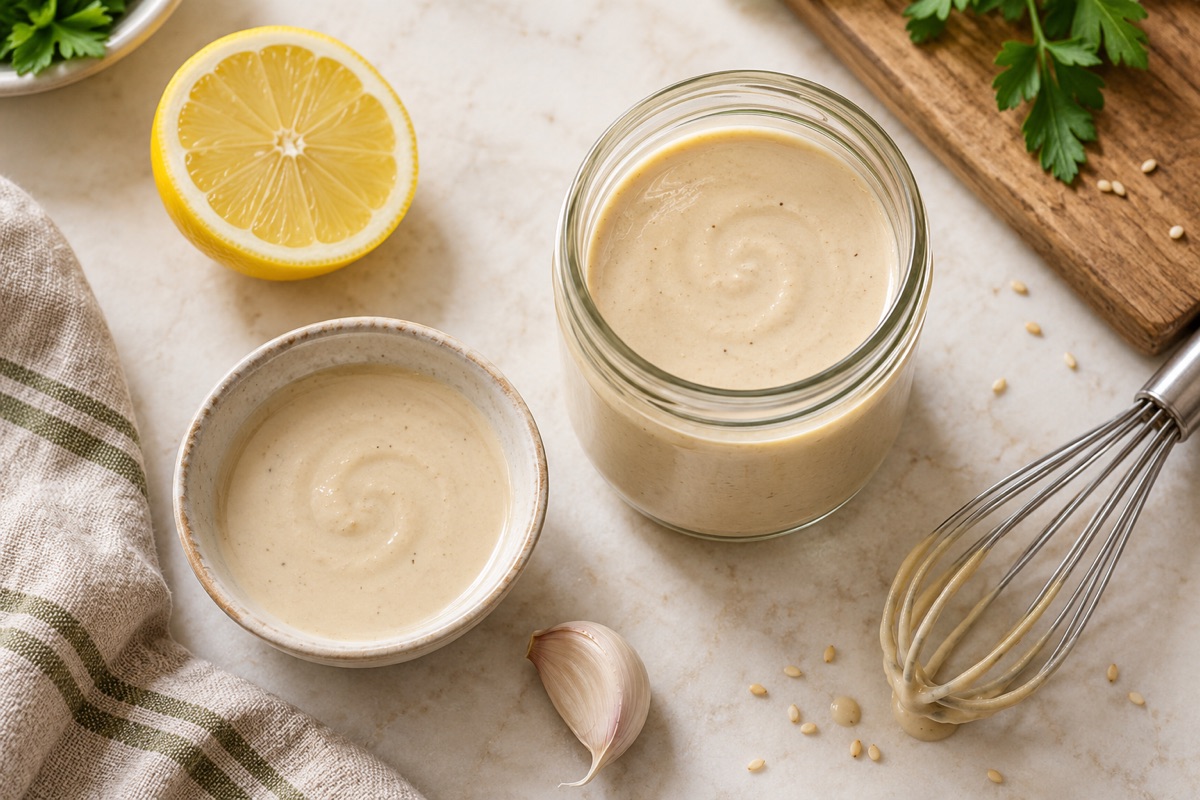
You can build on the base in other directions. For a salad dressing, add vinegar or lime juice, a little oil and a pinch of spice. For a cooling sauce, stir tahini into plain yogurt with lemon and herbs. For noodles, whisk it with soy sauce, rice vinegar and a little hot water to coat them, cold or warm.
Drizzles, spreads and toppings
Spoon tahini straight over roasted carrots, cauliflower, eggplant or sweet potatoes. It also goes on toast, on a bowl of oatmeal, or inside a sandwich with a savory filling or a drizzle of honey or date syrup. You can swirl it into soups at the table, much like a spoonful of cream or yogurt.
Baking and desserts
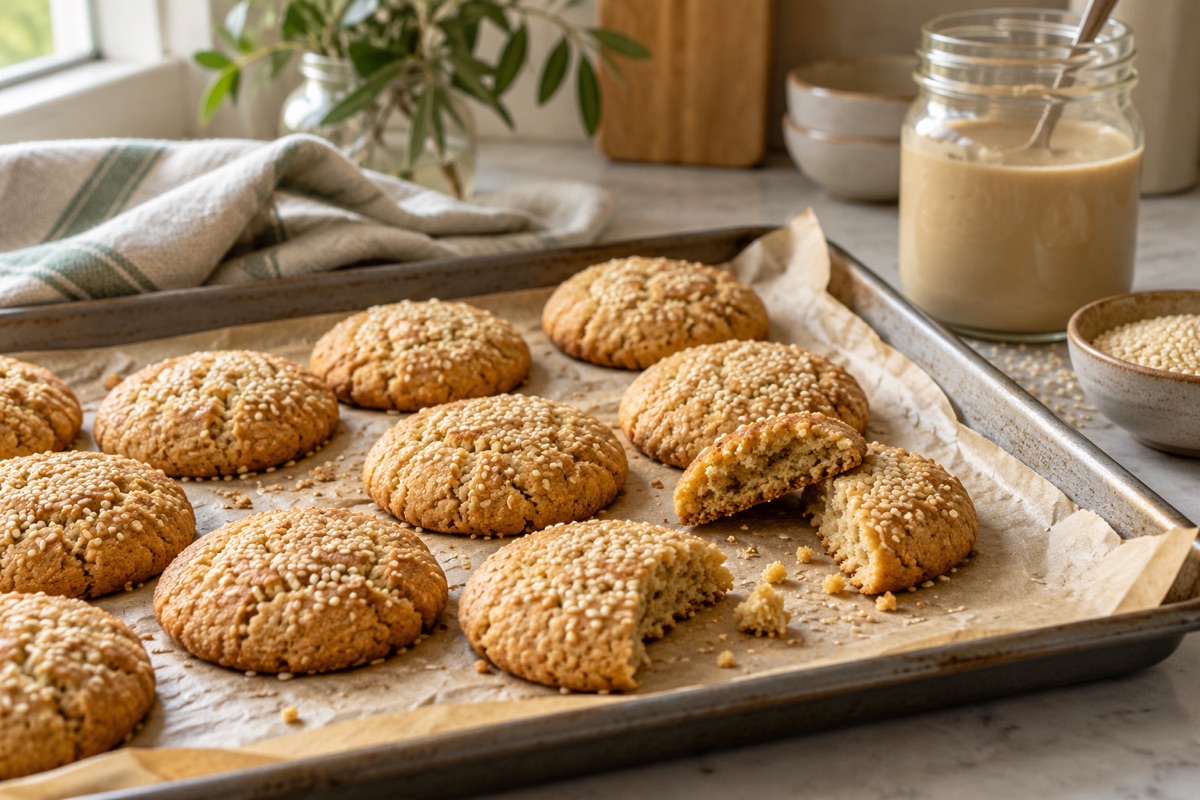
Tahini can stand in for part of the fat in some cookies, brownies and blondies, and it pairs well with chocolate, honey, dates and cinnamon. It can also be swirled into a batter, used in frostings, or mixed into granola, as in this homemade granola recipe. Every recipe balances fat, sugar and flour differently, so replace only a portion of the fat in a recipe you already trust and adjust from there.
Quick ideas by task
| If you want | Try |
|---|---|
| A sauce for vegetables | Tahini, lemon, garlic, salt, water |
| A salad dressing | Tahini with vinegar, oil and a little sweetener |
| A sweet spread | Tahini with honey or date syrup on toast |
| Baking depth | Tahini in cookies or brownies in place of part of the butter |
| A savory-sweet noodle sauce | Tahini with soy sauce, vinegar and hot water |
Substitutions and limits
If you have no tahini, smooth nut or seed butters, such as sunflower seed butter, can work in sauces and dressings, although the flavor will be different and less bitter. Peanut butter is another stand-in, with a stronger, sweeter flavor. Any substitute changes the taste, so adjust the lemon and salt as you go. If you are out of lemon, use another acid such as lime juice or a little vinegar, in smaller amounts.
If a sauce turns thick and pasty, add cold water gradually while whisking. A tahini sauce can seize at first when liquid is added and then loosen as you keep whisking. If it is too thin, stir in more tahini.
Tahini varies in how bitter it is. Pairing it with sweet or acidic ingredients, such as honey, dates or lemon, softens it.
Sesame as an allergen
Sesame is a major allergen in the United States. According to UConn Extension, sesame must be listed as an allergen on packaged foods, including dietary supplements, as of January 1, 2023 under the FASTER Act. The same source notes that products already shipped or in stock before that date did not have to comply, so unlabeled packaged foods may still appear on shelves. If you are cooking for someone with a sesame allergy, read every label, and ask the maker if you are unsure.
This guide does not discuss tahini’s effect on health. For questions about diet, allergy or medical needs, ask a qualified professional.
Ideas to try
Build a simple sauce and use it on whatever is in your kitchen. The article on seasonal cooking for beginners is a good place to start when you are deciding what to put it on.
- Roasted vegetable bowl: roast whatever vegetables are available, add a grain, and top with a lemon tahini sauce. For the grain, see how to rinse quinoa before cooking.
- Tahini toast: spread tahini on toast and add honey, fruit or a pinch of salt.
- Tahini cookies: replace part of the butter in a simple drop-cookie recipe with tahini, and expect a crumbly, nutty texture.
- Granola: stir a spoonful into the wet ingredients, as noted in the homemade granola recipe.
Sources
- Sesame in the News , UConn Extension (accessed October 4, 2026) Sesame labeling on packaged foods required from January 1, 2023 under the FASTER Act.