
Artichokes Explained: Types, Parts and Kitchen Uses
What a globe artichoke is, how baby artichokes and hearts differ, which parts you can eat, and how to choose between fresh, jarred and canned.
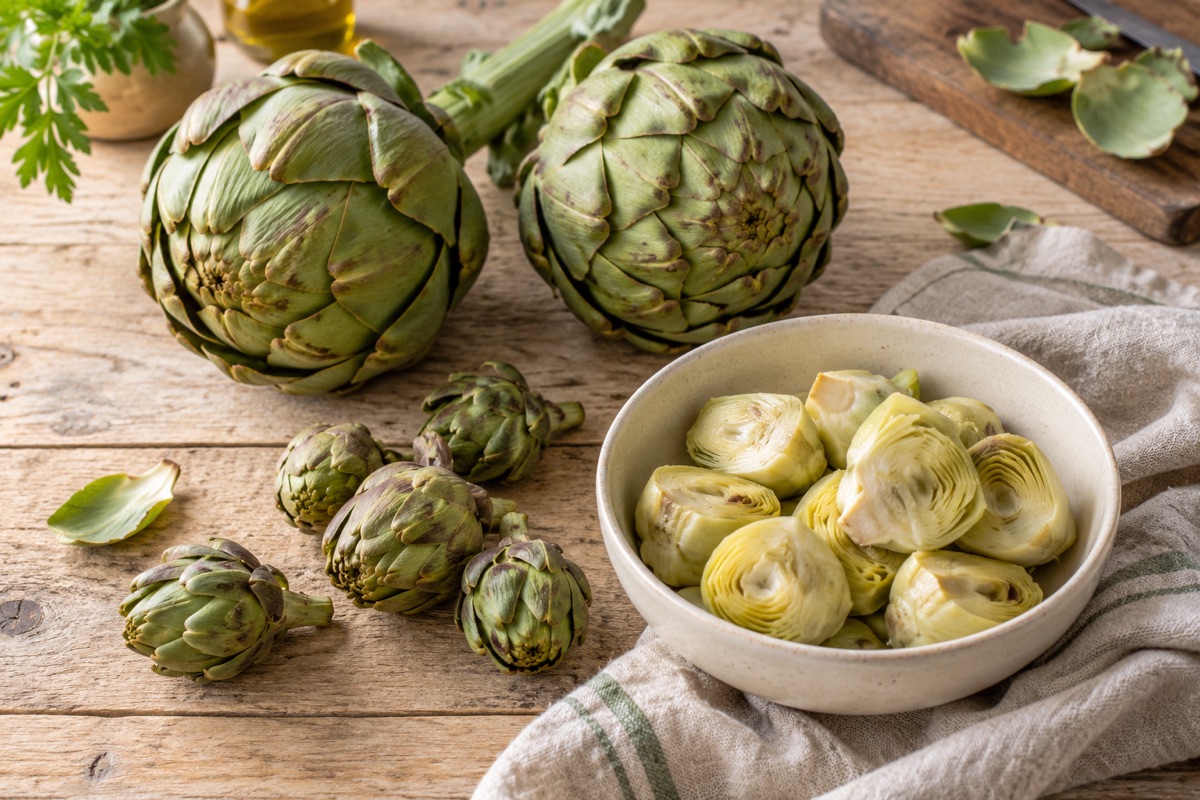
An artichoke is the unopened flower bud of a cultivated thistle. The large round one sold in most stores is the globe artichoke. Baby artichokes are small buds from the same plant, and artichoke hearts are the trimmed centers, sold fresh, jarred or canned.
This guide covers the parts, the common forms and how to pick the right one for what you are cooking. For cooking steps, see the how-to for steaming and eating a whole artichoke.
What an artichoke is
The globe artichoke (Cynara cardunculus var. scolymus, a variety of the species that also includes the cardoon, in the sunflower family) is grown for its flower bud. Left on the plant, the bud opens into a large purple thistle flower. For eating, buds are picked while still closed and tight.
The name causes some confusion. The Jerusalem artichoke is an unrelated plant with an edible tuber and is not covered here. “Globe thistle” is generally an ornamental plant, not the edible artichoke.
The parts
Slice a raw globe artichoke lengthwise and you can see the layers.
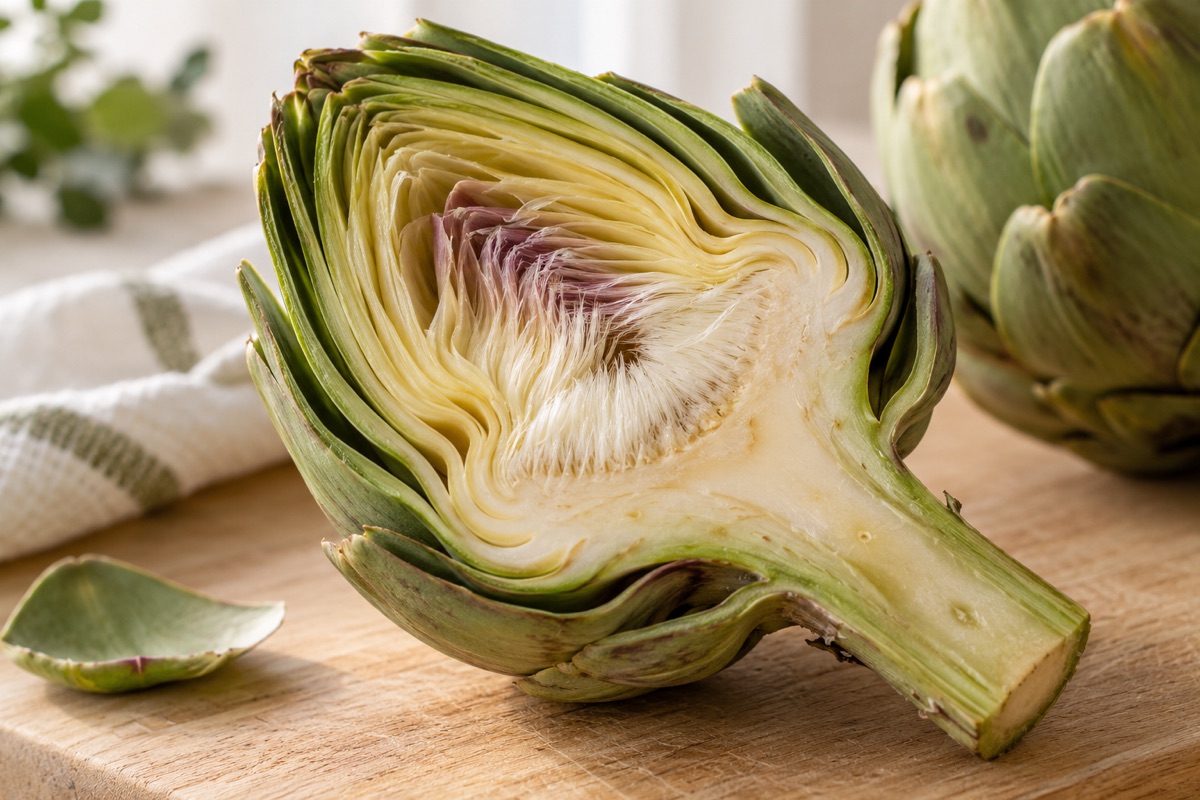
The outer leaves (bracts) are firm and often tipped with a thorn. When the artichoke is cooked whole, you eat only the fleshy base of each leaf. The inner leaves are paler and thinner, sometimes tinged purple, and they get more tender toward the center. The thin leaves covering the choke are also edible.
The choke is the fuzzy mass of immature flower parts over the heart. In a mature globe artichoke it is not eaten. The heart is the meaty base under the choke, and it is the part most cooks prize. The stem is edible once the tough outer layer is peeled away, and its interior tastes similar to the heart.
Types and buying forms
In a store, “type” can mean the variety of the plant or the form the artichoke is sold in. Varieties differ by color, size and shape, and are often not named. The form is what you can see on the shelf.
Fresh globe artichokes
These are the large buds meant for cooking whole, halving or trimming down to hearts. They take the most work, but they give you the full range of textures.
Look for closed, tight leaves and a bud that feels heavy for its size. Avoid buds with leaves that are splayed wide open or dry and cracked. Browning at cut ends is common and does not by itself mean the artichoke has gone off, but mold, sliminess or a sour smell do.
Baby artichokes
Baby artichokes are not a separate plant or an immature version of the big ones. They grow lower on the plant, where they stay small, and generally have little or no developed choke. That makes them quick to prepare: remove the tough outer leaves, trim the top and stem, and cook.
Artichoke hearts, fresh, jarred or canned
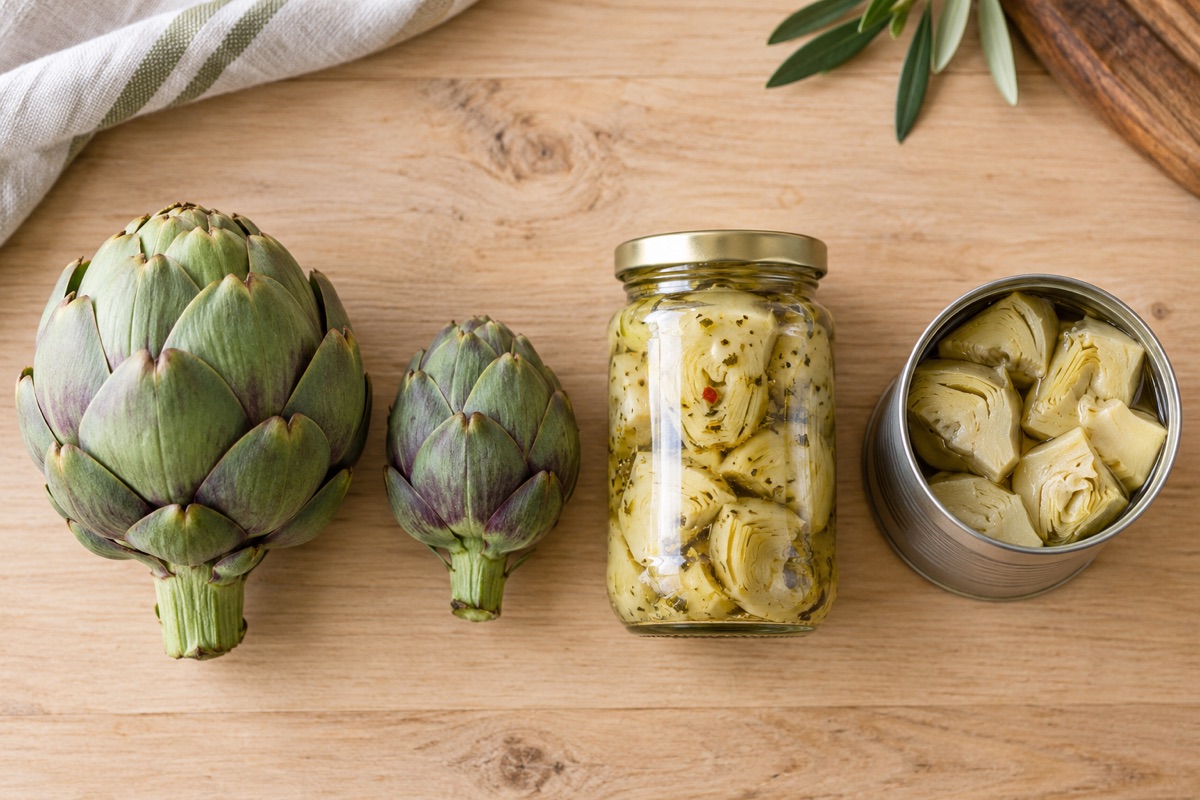
Fresh trimmed hearts come from peeling the leaves and choke away from a globe artichoke. They brown quickly once cut, so cooks usually keep them in acidulated water until cooking. Jarred hearts are often marinated, packed in oil or a seasoned brine. They are ready to eat and pick up flavor from the marinade. Canned or frozen hearts are packed in water or brine, or frozen. They are mild and soft, and useful where you need a cooked heart without any prep.
Read the label for what the hearts are packed in, since salt, oil and acid level vary. Once opened, keep jarred and canned hearts according to the package directions.
Comparison
| Form | Prep needed | Texture | Common uses |
|---|---|---|---|
| Fresh globe | High (trim, cook, remove choke) | Tender leaf bases, soft heart | Eaten whole, stuffed, braised |
| Baby | Low to moderate | Tender, mostly edible after trimming | Roasting, braising, sautéing |
| Fresh hearts | Moderate | Firm to tender | Sautés, braises, salads |
| Jarred hearts | None | Soft, seasoned | Antipasto, pizza, salads, dips |
| Canned or frozen hearts | None to low | Soft, mild | Dips, baked dishes, pasta |
How to use each form
A whole globe is steamed or boiled and eaten leaf by leaf, or stuffed and baked, which is also traditional. Halves or quarters are good roasted, grilled or braised, with the choke scooped out first. Baby artichokes can be halved or quartered and sautéed, roasted or braised, and they suit quick pan dishes. Hearts are simmered, sautéed or chopped into dips, tarts and pasta dishes.
Acid helps with fresh artichokes. Lemon juice on cut surfaces slows browning, and many recipes use it in the cooking water.
Substitutions and limits
- Fresh hearts for jarred or canned: workable, but cook the fresh hearts until tender first. Adjust the salt, because jarred hearts bring their own.
- Marinated hearts for plain canned: the flavor will be stronger. Drain them well and cut back on added oil, acid or herbs.
- Baby artichokes for hearts: a reasonable swap in sautés and braises once trimmed.
- Canned hearts in place of a whole artichoke: not a swap. The point of a whole one is the leaves and the eating process.
- Frozen versus canned: both work in dips and baked dishes. Frozen ones are usually less salty, but check the package.
Recipes to try
Start with the steps for steaming a whole artichoke, which also explains how to eat each part. If you like to cook with what is in season, this note on seasonal cooking has ideas for matching produce to your menu.
Sources
- Artichoke - Wikipedia , Wikipedia (accessed October 4, 2026)