
Nitrogen Flushing in Coffee Packaging, Explained
Nitrogen flushing swaps most of the air in a bag for nitrogen before it is sealed, which lowers oxygen at packing time. It stops mattering once you open the bag.
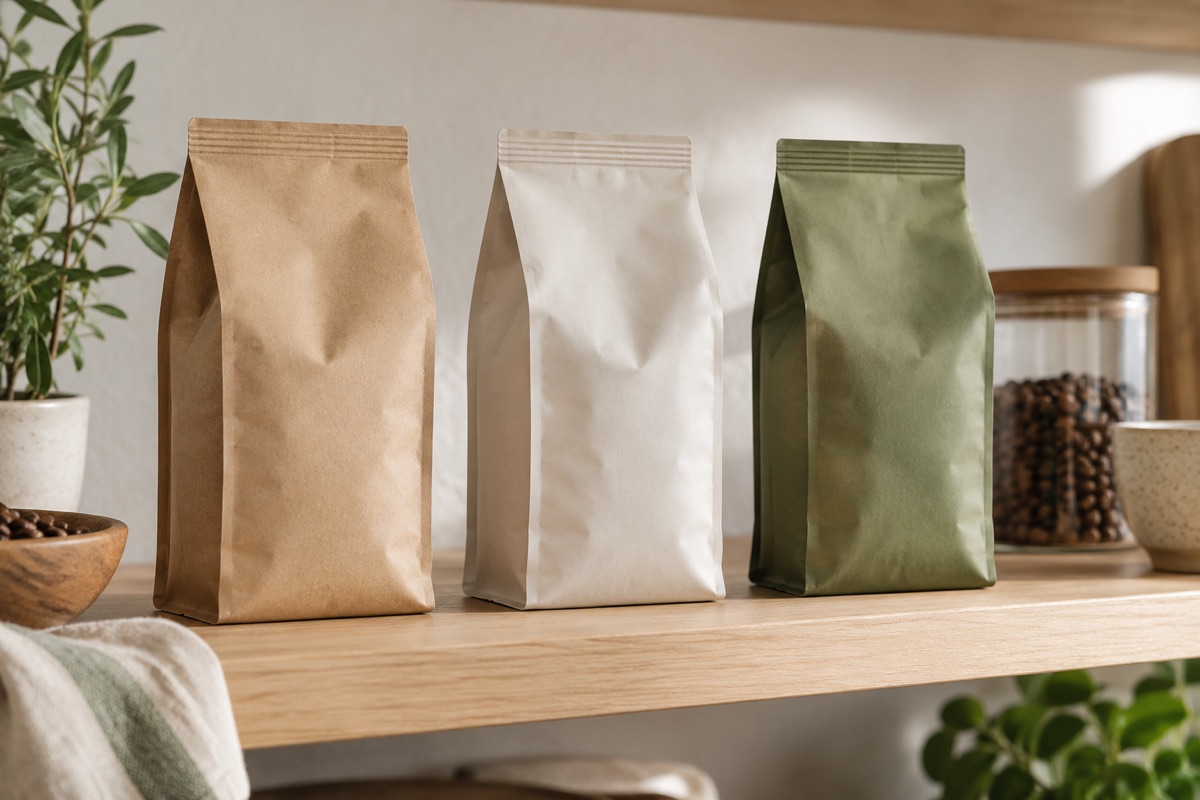
Nitrogen flushing means replacing most of the air in a package with nitrogen just before it is sealed, so less oxygen is left to react with the coffee. It helps while the bag stays sealed. Once you open the bag, air flows back in and the packing gas no longer plays a part.
Nitrogen flushing is one tool alongside the bag’s film, its seals and, for coffee, its valve. It does not give coffee a fixed shelf life, and no figure in months should be read from it.
What you see on the package
Nothing on the bag shows what gas is inside, though some labels mention it. What you can see is the bag around it: a sealed top, often a flat crimped edge, and on many coffee bags a small one-way valve.
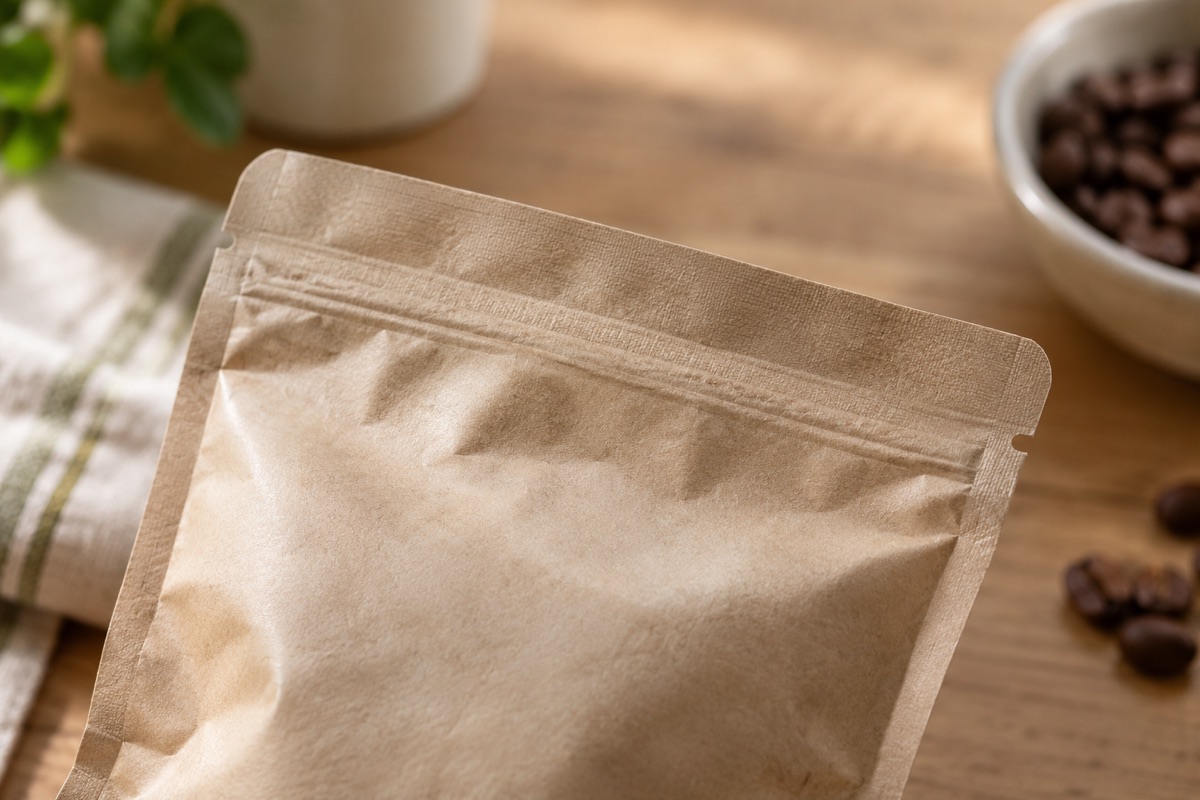
A valve means the bag is also set up to release gas from the beans; why coffee bags have valves covers that part.
How it works
Air is mostly nitrogen, with oxygen as the reactive part. In the general technique called modified atmosphere packaging, the gas inside a package is changed to slow spoilage. The Wikipedia overview says the process generally lowers the amount of oxygen in the package and that oxygen can be replaced with nitrogen, a comparatively inert gas, or with carbon dioxide. It says nitrogen is mostly used as a filler gas to prevent a pack from collapsing, and that it is also used to prevent oxidative rancidity in packaged products such as snack foods by displacing air, especially oxygen.
For coffee, the logic is the same. A Zurich University of Applied Sciences study explains that eliminating oxygen inside the package during packaging helps prevent or slow oxidative degradation of coffee aroma. The gas is introduced at the packing line, the bag is sealed, and the bag’s film and seal keep the new atmosphere in.
Two limits come with that. Flushing lowers oxygen but does not remove it: the Zurich study attributes the drop in one aroma compound it tracked in nitrogen-packed beans largely to that compound’s inherent instability, plus some reaction with residual oxygen in the packaging. And it acts at packing time, so the atmosphere stays useful only as long as the seals and film hold.
Compared under real conditions
No published figure applies to every coffee in every bag, so here are the conditions behind the numbers that are available.
On what oxygen does to coffee: in a laboratory study at the University of Minnesota, roasted and ground coffee was stored at fixed oxygen levels from 0.5 to 21.3 kPa, water activity from 0.106 to 0.408, and temperatures from 4 to 35°C. Moving from the lowest to the highest oxygen level made the coffee deteriorate about 20 times faster; a 0.1 rise in water activity added about 60%, and a 10°C rise only about 15 to 23%. Shelf life ended when half of the consumers found the coffee unacceptable. Oxygen was the largest factor in that test, but it was ground coffee in controlled conditions, not a flushed retail bag.
On what flushing did for a related food: the most detailed test of nitrogen flushing in the sources opened for this article is on potato crisps, not coffee. Researchers at the University of Nottingham compared flushed and unflushed packs. The flushed packs had a residual oxygen content below 3.5% and were sealed in a laminate film that includes a metallized layer. All packs were stored at 45°C for 10 weeks to speed up aging. The researchers reported that flushing significantly increased shelf life in terms of flavor compound stability and sensory perception, and the paper’s highlight line puts it at about two weeks longer under these accelerated conditions. They also reported that the main negative notes, rancidity and staleness, developed over storage with or without gas flushing. Flushing slowed the process; it did not stop it.
On what the coffee study packed: the Zurich study used roasted Arabica beans packed under nitrogen in valved foil-laminate bags. Unopened packages showed little change in an aroma marker over nine weeks. That tells you something about one coffee in one package, nothing more.
What it can and cannot do
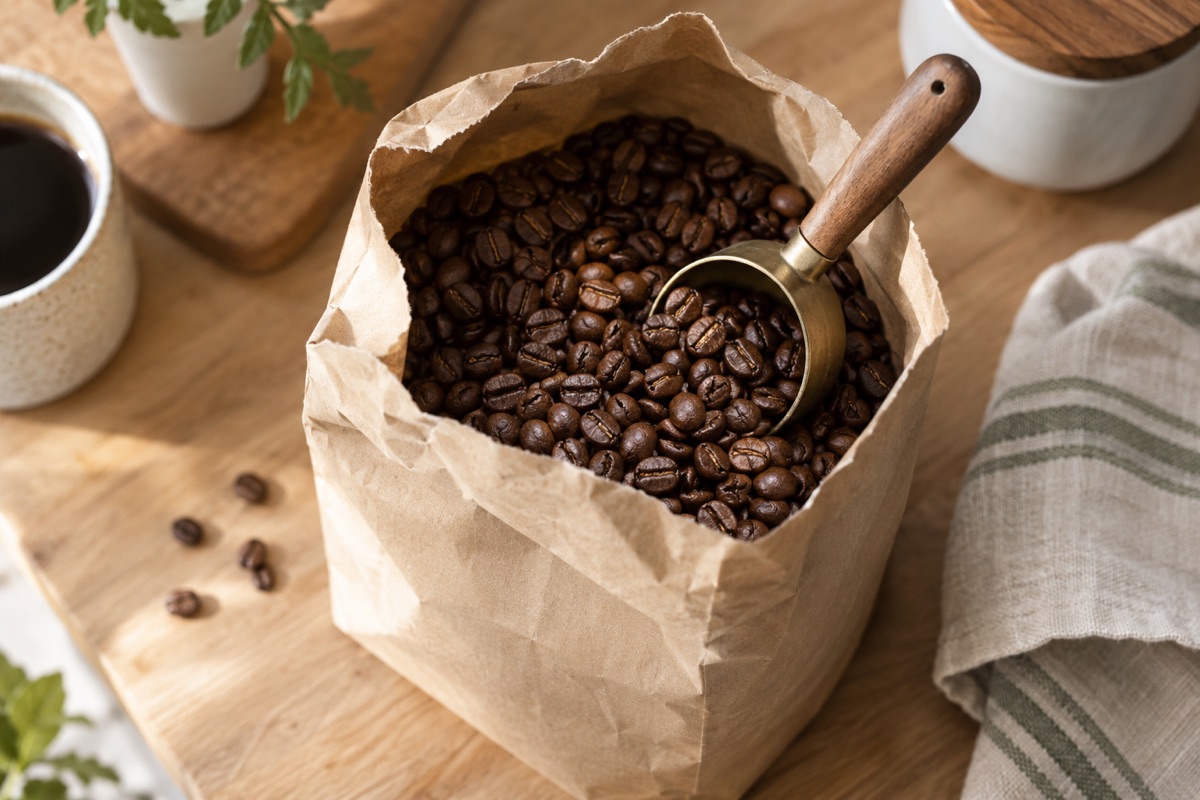
Flushing reduces the oxygen the coffee is exposed to while the bag is sealed. Based on how oxygen affects coffee in the studies above, a sealed bag should keep more of its aroma than an air-filled one, other factors being equal.
It stops working when you open the bag. The Zurich authors note that after a package is opened the protective atmosphere changes, which accelerates the loss of freshness. It cannot make coffee last indefinitely, because oxygen is one factor and moisture, temperature and time also matter. It cannot make up for a weak seal, a punctured bag or a film that lets oxygen through; Wikipedia’s page on oxygen transmission rate notes that heat seals, creases and closures on a finished package often reduce its effective barrier. And it says nothing about food safety. Roasted coffee is a dry, shelf-stable food, as the Zurich paper notes, so the gas is about flavor.
What it means at home
If a bag says it was nitrogen flushed, read that as one good thing about how it was packed, not a promise about the next several months. Keep the bag sealed until you plan to use it and follow the best-by date on the label.
Once you open it, the packing gas is gone for practical purposes. What counts after that is how often you open the bag, how tightly you close it and where you keep it. How to store coffee beans after opening compares bag closures and containers.
Snack bags use a similar idea, and how the bags themselves are closed is covered in how potato chip bags are sealed.
Sources
- The impact of nitrogen gas flushing on the stability of seasonings (cheese & onion seasoned potato crisps) , Food & Function, University of Nottingham (PubMed Central, open access) (accessed October 4, 2026) Source for the residual oxygen level, test conditions and result for nitrogen-flushed potato crisps. Crisps, not coffee.
- Modified atmosphere , Wikipedia (accessed October 4, 2026) General background on modified atmosphere packaging and gas flushing.
- Effects of different coffee storage methods on coffee freshness after opening of packages , Food Packaging and Shelf Life (Zurich University of Applied Sciences) (accessed October 4, 2026) Coffee packed under nitrogen; what changes after the package is opened.
- Application of Weibull Hazard Analysis to the Determination of the Shelf Life of Roasted and Ground Coffee , LWT, University of Minnesota (Experts@Minnesota) (accessed October 4, 2026) Abstract used for the effect of oxygen on roasted and ground coffee in controlled laboratory conditions.
- Oxygen transmission rate , Wikipedia (accessed October 4, 2026) Background on how packaging barrier is measured and why seals can reduce it.