
Food Packaging Cost per Unit Calculator
Work out packaging cost per sellable unit from materials, labor, fixed costs and scrap. Includes the formula, a hypothetical example and what the result leaves out.
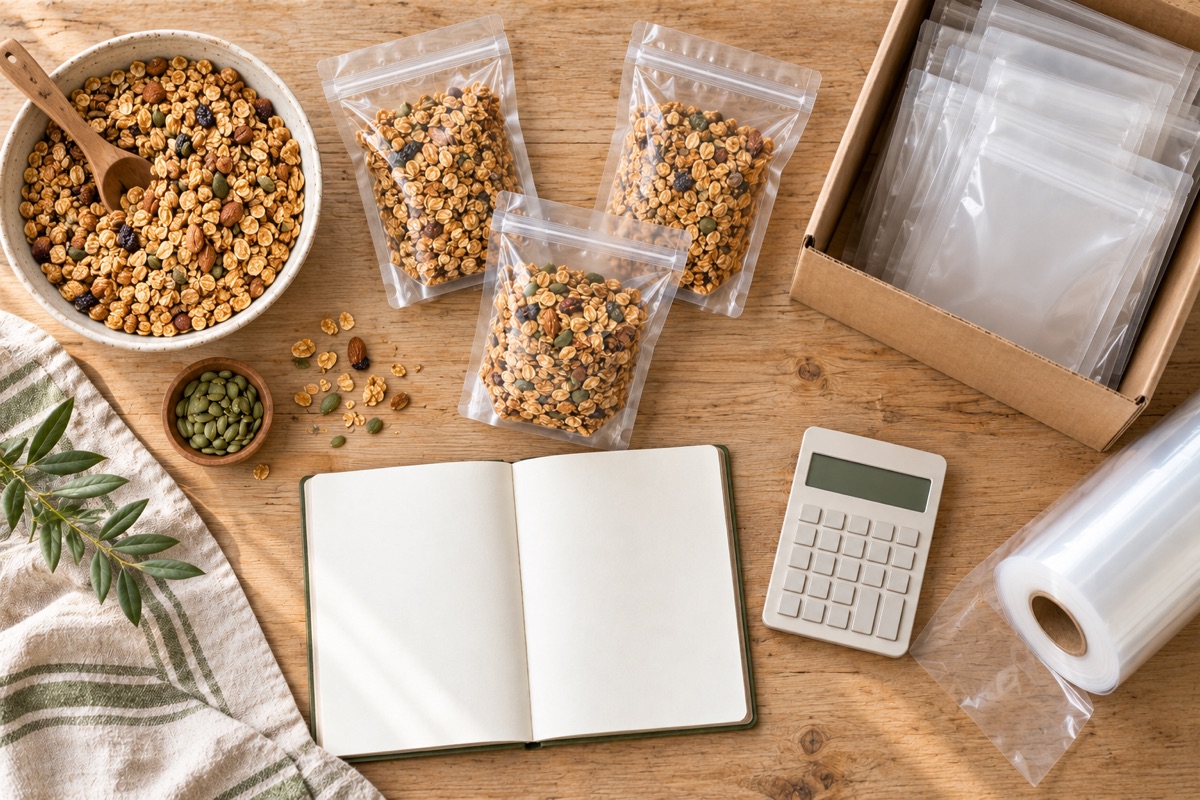
Packaging cost per unit is everything you spend to pack one batch, divided by the number of packs you can actually sell. The calculator below does this arithmetic from your own numbers. This page explains each input so the result means something.
The formula the calculator uses:
cost per unit = (materials + labor hours × labor rate + allocated fixed costs + packaging-stage scrap loss) ÷ sellable packed units
Who this is for
This is for small food makers who pack by hand or with a small machine and want to know what the pack adds to the cost of each item. It suits a granola maker comparing pouch sizes, a baker pricing a gift box, or anyone preparing the budget line for the packaging brief. Use costs from one batch or one period for every field. Mixing a single batch’s materials with a whole month’s labor produces a number that describes nothing.
What each input means
Packaging materials cost for this batch
Add up everything you use to pack the batch: pouches, jars, lids, boxes, inserts, labels, tape, shipping cartons if they are part of the pack, and any film or desiccant. Use the price you actually paid, including shipping and tax on the supply order if you cannot recover them.
If you buy supplies in larger lots, divide the lot cost by the number of batches it covers. Include only the supplies used by this batch.
Ask suppliers whether the pack material is intended for direct food contact. The FDA says substances that come into contact with food are generally held to the same safety standard as ingredients. Price a food-appropriate material, not the cheapest film you can find.
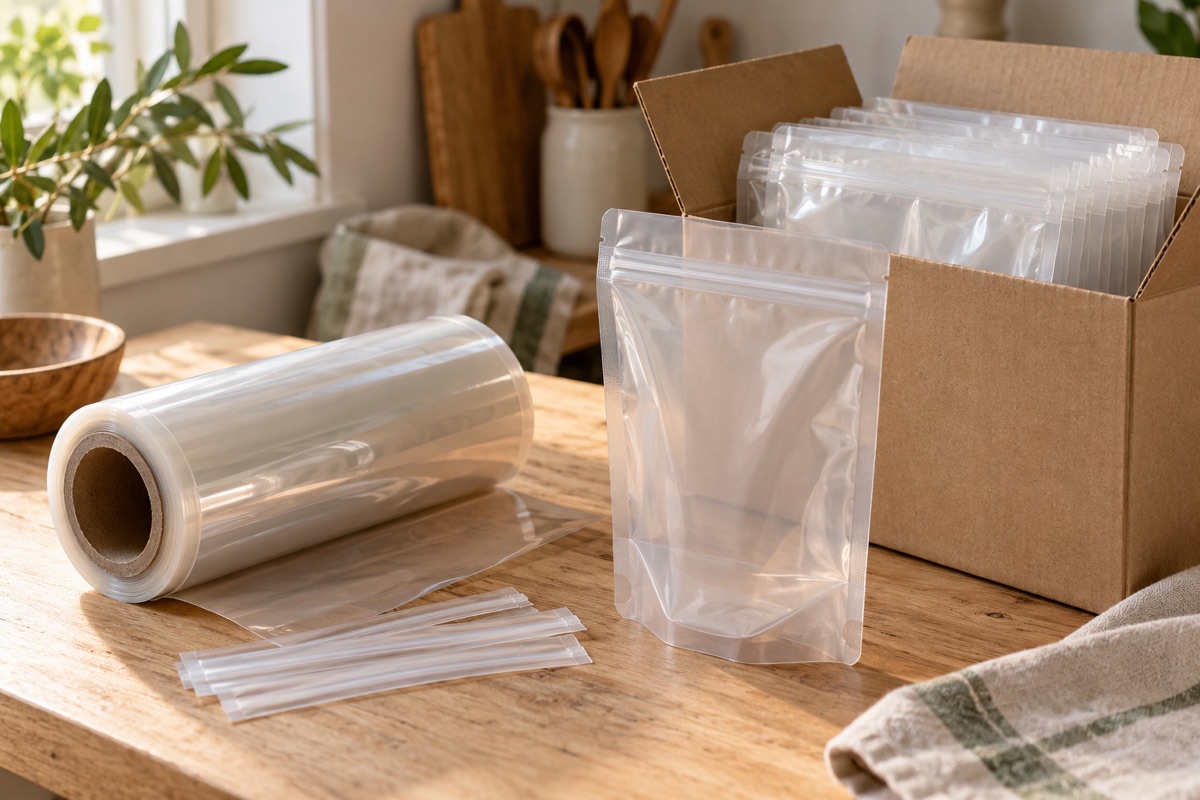
Packaging labor hours and labor rate
Labor hours cover the packing steps only: filling, sealing, labeling, boxing and cleaning the packing area. Leave out mixing, baking and cooking. Time a real batch rather than estimating.
Labor rate is the hourly cost you assign. If you are paying someone, use their hourly cost. If you are doing the work yourself, choose a rate and write down what it assumes. The calculator multiplies hours by rate for you.
Packaging-related fixed costs allocated to this batch
Fixed costs are things you pay whether or not you pack: rental or lease of a sealer, a share of a printing setup fee, a storage rack, a share of a market fee. To allocate, take the cost for a period and divide it by how many batches you make in that period.
Count only costs tied to packing. Rent for the whole kitchen is a business cost, but it is not a packaging cost unless you assign a defined share to packing.
Packaging-stage scrap loss
Scrap is value lost during packing that does not end up in a sellable pack. It includes product spilled during filling and packs rejected for bad seals or crooked labels.
Sellable packed units
Count only packs that pass your own quality check and could be sold. Do not count packs set aside as rejects. If you pack 850 and 50 are scrapped, the number is 800.
How to avoid double-counting scrap
Scrap is the field people most often count twice. A wasted pouch has two costs: the pouch (a material) and the product that was in it.
The calculator notes this directly: if your materials cost already includes wasted film or pouches, leave that waste out of scrap. Pick one rule and keep to it.
- Rule A: materials equals everything you used, including the pouches that were rejected. Scrap equals only the other value lost, such as the product in the rejected packs.
- Rule B: materials equals only the pouches in sellable packs. Scrap equals the whole cost of rejects, both pouch and product.
Rule A is usually simpler, because the material figure comes from what you bought. Whichever you use, a rejected pouch should appear once.
A hypothetical worked example
The numbers below are made up for illustration. They are not typical costs, and they are not a benchmark for any product or region.
Suppose a small maker packs one batch of dry snack mix into pouches:
| Input | Hypothetical value |
|---|---|
| Materials (pouches, zip closures, labels, including 50 rejected pouches) | $240 |
| Labor hours | 4 |
| Labor rate | $20 per hour |
| Allocated fixed costs (share of a sealer rental) | $60 |
| Packaging-stage scrap (product in rejected packs only) | $20 |
| Sellable packed units | 800 |
Labor is 4 × $20 = $80.
Total cost is $240 + $80 + $60 + $20 = $400.
Cost per unit is $400 ÷ 800 = $0.50.
Per unit, that breaks down like this:
| Cost | Per unit | Share of total |
|---|---|---|
| Materials | $0.30 | 60% |
| Labor | $0.10 | 20% |
| Fixed costs | $0.075 | 15% |
| Scrap | $0.025 | 5% |
This example follows Rule A. The 50 rejected pouches are inside the materials figure, so the scrap line carries only the product lost in them.
Now suppose only 700 of the same batch are sellable and the other costs stay the same. The cost per unit becomes $400 ÷ 700, which is about $0.57. Fewer sellable units raise the cost of every remaining pack, which is why the denominator matters as much as the costs.
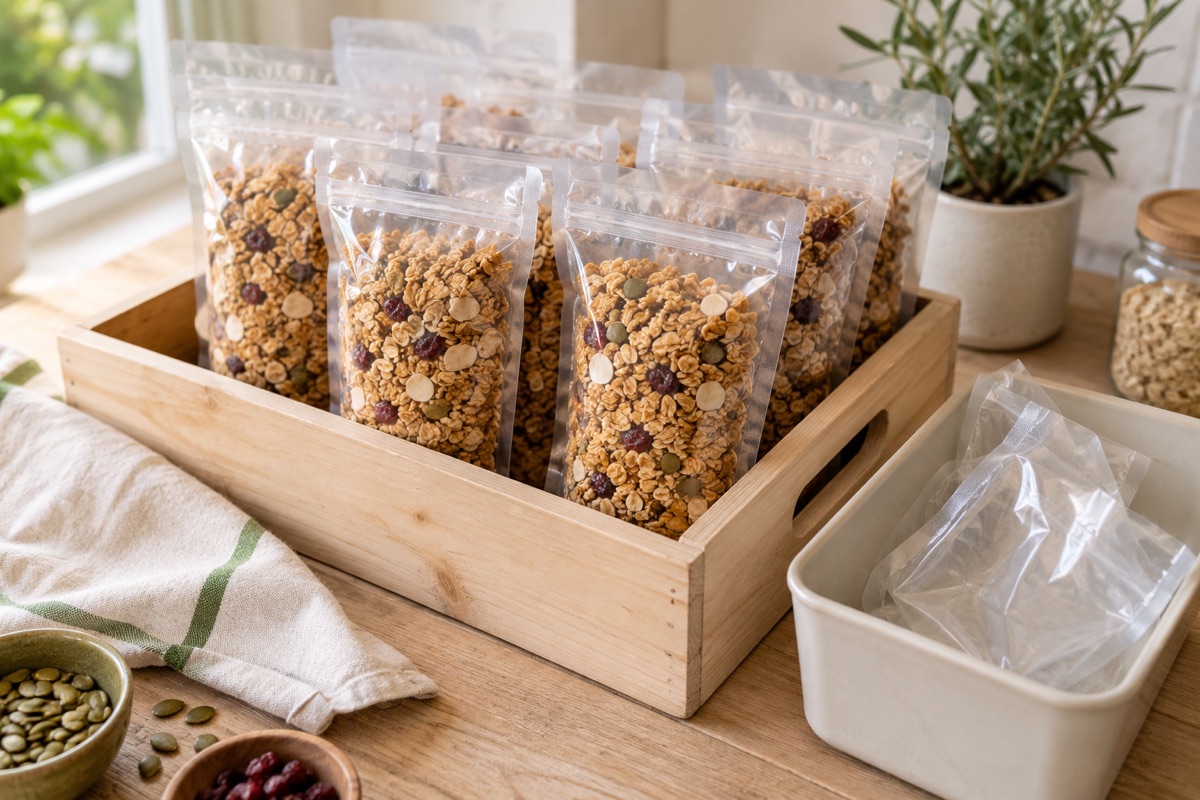
Using the calculator below
The calculator opens with example values and a badge that says to replace them. Change any field and it recalculates. It shows the cost per unit, the total, and a breakdown by materials, labor, fixed costs and scrap. Currency is a label only, so it does not convert anything.
Run it more than once. Try a different pouch, a larger batch, or a lower reject rate, and compare. The share-of-total column shows which line drives the cost. If materials dominate, the pack choice matters most. If fixed costs dominate, spreading them across more units helps.
What the number does not tell you
It is not a supplier quote. Quotes depend on quantity, specification, printing and shipping, and they change.
It is not a selling price. Packaging cost is one part of what it costs to make and sell a product. Ingredients, other labor, licensing, selling fees and profit are not in it.
It does not predict savings or return on investment. Whether a new pouch or machine pays off depends on volumes and prices that this tool does not model. It is also only as good as your inputs: timing a real batch and reading real invoices makes it more reliable.
It does not cover compliance. Labels are required for most packaged foods, and FDA does not pre-approve them. Requirements vary by where you sell. Check the FDA’s Food Labeling Guide as a US starting point, and check local rules elsewhere.
It does not validate shelf life or food safety. A cheaper pack may protect the product less. Get professional advice before making shelf-life claims.
Next steps
- Gather invoices and time one real packing run.
- Enter the numbers in the calculator, using one rule for scrap.
- Write your assumptions next to the result so you can compare later runs.
- Use the result as the target cost in your supplier brief.
- See how others pack products for sale in package cookies for sale and granola packaging for a small business.
Packaging Cost per Unit Calculator
Example values: replace them with your own
Use costs from the same batch or period for every field.
If your materials cost already includes wasted film or pouches, leave that waste out of scrap so it is not counted twice.
Formula: cost per unit = (materials cost + labor hours × labor rate + allocated fixed costs + packaging-stage scrap loss) ÷ sellable packed units.
Enter your numbers to see the result.
This estimate uses your inputs. It is not a quote and does not predict savings or return on investment.
Sources
- Food Ingredients & Packaging , U.S. Food and Drug Administration (accessed October 4, 2026) Substances that contact food are held to a safety standard.
- Packaging & Food Contact Substances (FCS) , U.S. Food and Drug Administration (accessed October 4, 2026)
- Guidance for Industry: Food Labeling Guide , U.S. Food and Drug Administration (accessed October 4, 2026) Labels are required for most packaged foods; FDA does not pre-approve them.