
A Food Packaging Brief Template for Small Brands
A free packaging brief for small food makers. Learn what each section asks, why suppliers need it, then build a copyable brief with the template below.
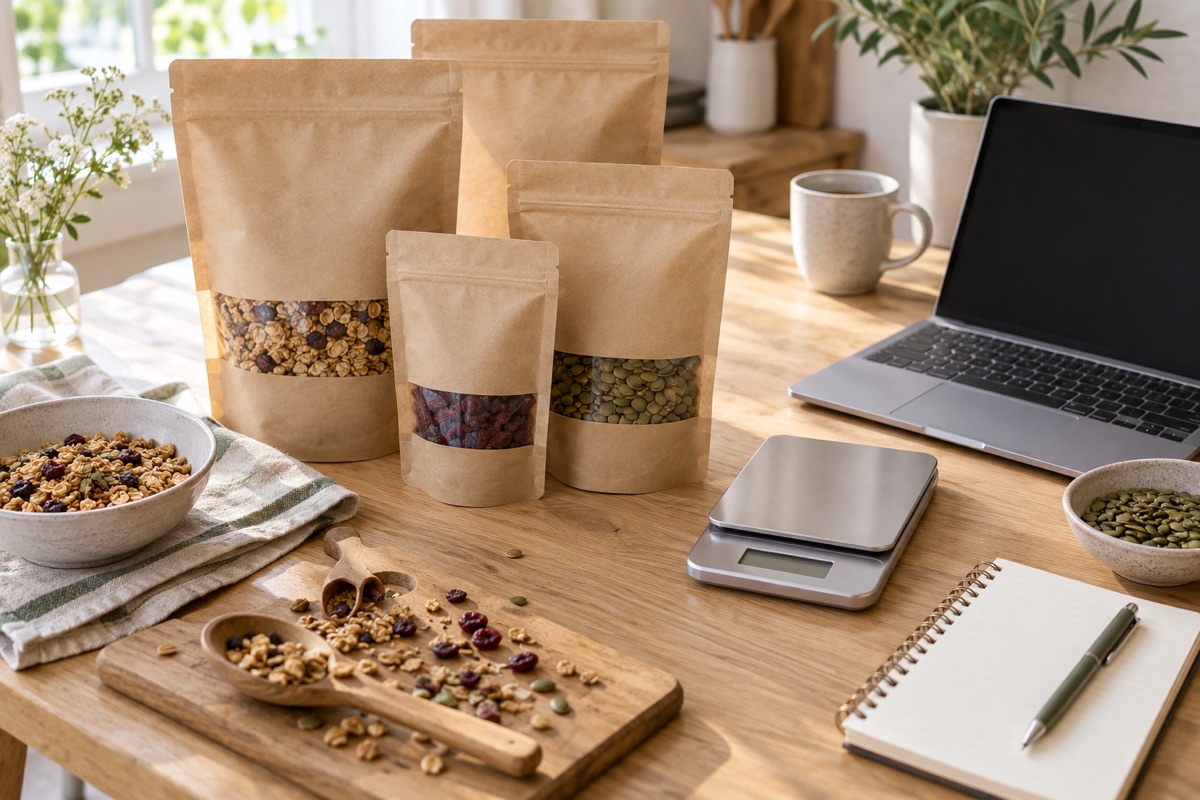
A packaging brief is a one- or two-page description of your product and what the pack must do. Packaging suppliers use it to suggest formats, materials and quantities that fit. Without one, you tend to get generic quotes for a generic pouch, and a long email chain to fill the gaps.
The template below turns your answers into a plain-text brief you can copy, download or print. This article explains each section so you know what to put in it.
Who this brief is for
It is for small food makers who are about to ask a supplier for samples or a quote: a granola maker moving from jars to pouches, a baker selling cookies at markets and online, a sauce maker comparing bottles. It also helps if you are redesigning packaging and want to compare options consistently. For examples of what packing a product for sale involves, see how to package cookies for sale and granola packaging for a small business.
You do not need final answers for every field. Leave blanks where you are unsure. The builder omits empty fields, and a brief that says “not sure yet” about the pouch type is more useful than one that guesses.
What each section asks and why suppliers need it
Product
Give the product name, the net weight or volume per pack, and tick the characteristics that apply: dry, oily, crumbly or fragile, powder, liquid or sauce, frozen, chilled.
Suppliers use this to decide what the pack must resist. An oily product can show through some films. A fragile product may need a box or a rigid tray. A liquid needs a spout, a jar or a barrier that will not leak. The net amount sets the physical size of the pack, so give the figure you plan to fill and the unit you use.
Volume
Enter units per batch and batches per month. Suppliers price by quantity and often have minimum orders. If you say you make a few hundred packs a month, they can tell you whether stock sizes or short-run printing are realistic. If you leave it out, you may get a quote built for a factory.
Pack format
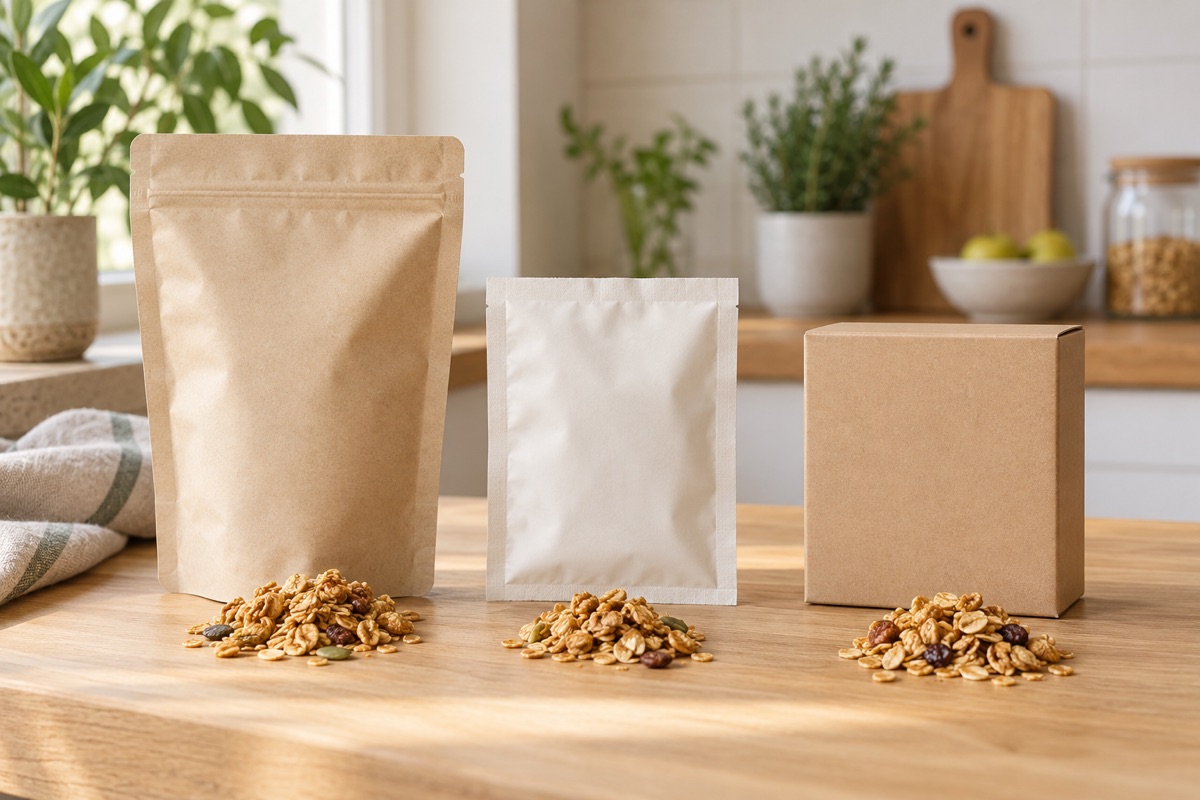
Pick the preferred format (stand-up pouch, pillow bag, flat pouch, box or carton, jar or bottle, tray, or not sure yet) and whether it should be reclosable.
Formats have different strengths. Stand-up pouches show well on a shelf and can include a zipper. Pillow bags are simple and often cheaper. Boxes protect fragile items. Jars and trays suit products that need rigid support. Choose “not sure yet” if you want the supplier to suggest options.
Protection needs
Tick what the pack must guard against: moisture, oxygen, light, grease resistance and crush protection. Add anything else in the free-text box.
This section matters most for material choice. A pack for crisp, dry food needs a moisture barrier. A product that goes stale from air exposure needs low oxygen transmission. Light can affect some products. Be honest about which of these your product is sensitive to. If you do not know, say so and ask the supplier which questions to answer first.
Shelf life is a separate question. The brief does not tell you how long a product will last in a given pack, and a supplier’s barrier specification alone cannot answer it either. Shelf life and food safety need professional validation, for example through a food scientist or your state or local authority.
Channels
Tick where the product will be sold: farmers market, retail shelf, online and shipping, wholesale or gifts. Add the region of sale.
The channel changes the requirements. A pack that sits on a table at a market for a day has different needs from one that is shipped in a box or kept on a retail shelf for months. Retail and wholesale buyers may also set their own pack and barcode rules. The region matters because label rules differ by country and state.
Labeling
List what must appear on the pack. A starting list might include ingredients, allergens, net quantity, the name and place of business, a batch or lot code and a barcode.
Suppliers need this to size the label area and decide how to print: directly on the pack, with a sticker or with a sleeve. They do not decide what your label must say. That is your responsibility, and requirements depend on where you sell. For the United States, the FDA’s Food Labeling Guide is a starting point. It notes that FDA does not pre-approve food labels, so you cannot count on anyone checking your label for you. If you sell in another country or across borders, check that region’s rules.
Budget and timing
Enter a target cost per pack, currency, first-order quantity and a target date.
A target cost lets a supplier tell you early whether a format fits. A first-order quantity tells them whether you are buying a trial or a season’s supply. A date shows whether stock items can arrive in time or whether custom printing will not. If you do not yet know your numbers, work them out first with the packaging cost calculator, then enter the result as your target.
Notes
Use notes for things the other fields do not cover: filling method, how you seal packs, sustainability preferences, or anything you have already tried. Say what you currently use and what is not working.
Using the template below
Fill in what you know. Your answers are saved in your browser only, so they stay on your device. Click “Generate brief,” then copy it into an email, download it as a text file or print it. The brief ends with a reminder that shelf life and food safety need validation and that labeling rules should be checked locally.
Getting useful responses from suppliers
Send the same brief to more than one supplier so the replies are comparable. When quotes arrive, check these points:
- Does the quote match the pack format and quantity you asked for?
- What is the minimum order, and can you buy a smaller sample run first?
- Is the material suitable for direct food contact? FDA treats substances that contact food as subject to a safety standard, and manufacturers are responsible for marketing safe food. Ask the supplier how they document that the material is intended for food use.
- What is the lead time from approval to delivery?
- What is not included, such as printing plates, shipping or tooling?
Ask for samples of the finished pack and fill them yourself with your own product. Look at seal strength, how well the pack stands, whether grease shows through and how it behaves when shipped. Seeing what your own product does in the pack is more reliable than reading a specification.
When to get professional help
A brief gets you to a quote. It does not replace expert advice. Consider a food scientist, your state or local food authority or a packaging engineer when:
- You make a claim about shelf life or storage on the label.
- Your product is moist, low-acid or otherwise sensitive.
- You plan to sell across state or country borders.
- You want a specialty process such as modified atmosphere or vacuum sealing.
- A retail buyer has set their own packaging standards.
Next steps
- Fill in the template below with what you know.
- Work out a target cost per pack using the cost calculator.
- Send the brief to two or three suppliers and ask for samples.
- Fill, seal and ship a few sample packs yourself before committing to a large order.
- Verify your labeling and licensing rules for the place where you sell.
Packaging Brief Builder
Fill in what you know. Empty fields are left out of the brief. Your answers stay in this browser.
Shelf life and food safety need professional validation. This brief only helps you describe what you need to packaging suppliers.
Sources
- Guidance for Industry: Food Labeling Guide , U.S. Food and Drug Administration (accessed October 4, 2026) States that FDA does not pre-approve food labels.
- Food Ingredients & Packaging , U.S. Food and Drug Administration (accessed October 4, 2026) Food contact substances are held to a safety standard; manufacturers are responsible for marketing safe food.
- Packaging & Food Contact Substances (FCS) , U.S. Food and Drug Administration (accessed October 4, 2026)