
How to Write Recipe Headnotes That Help the Cook
A recipe headnote is the short introduction above the ingredients. Learn what to include, what to cut, and see made-up before-and-after examples.
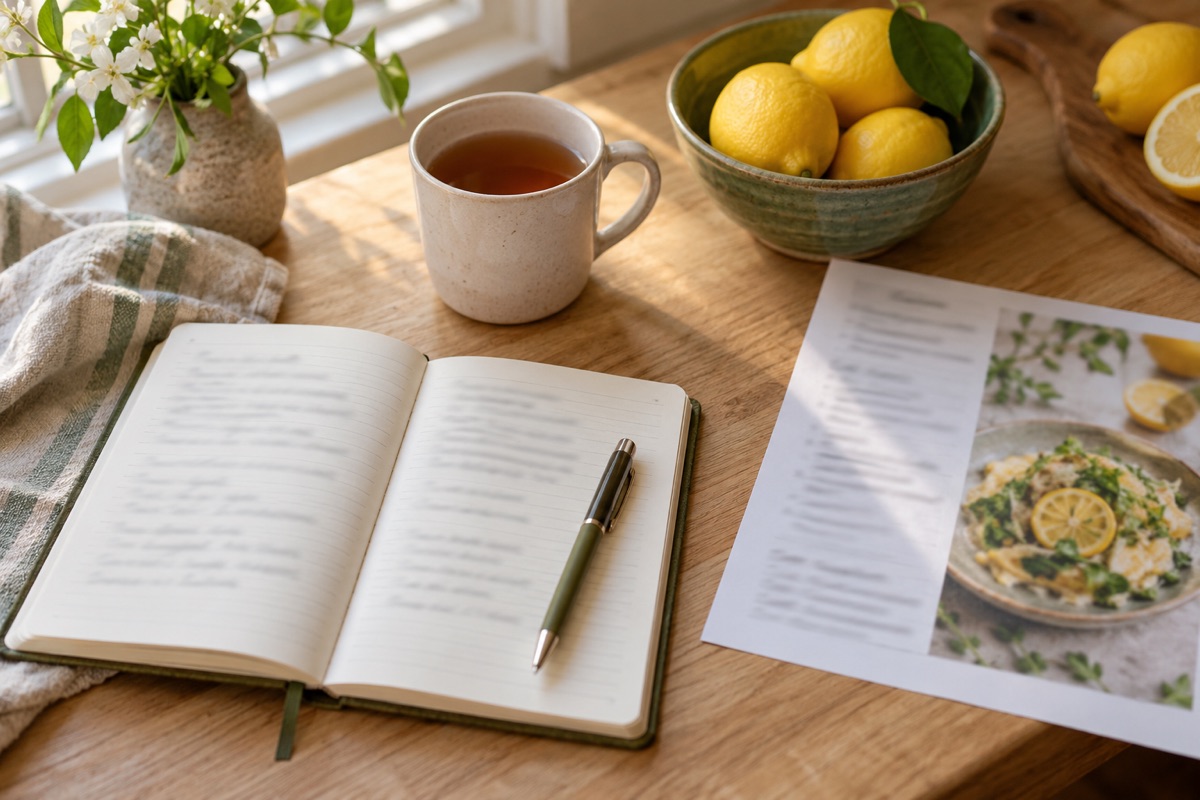
A recipe headnote is the short paragraph between the title and the ingredient list. It does two jobs: it tells the cook what to expect from the dish, and it gives the recipe some human context without making anyone scroll past it.
Aim for two to five sentences. Lead with what helps the person standing at the counter. Add the story only if you have one that is true.
What a headnote is for
Before starting, a cook wants to know what the dish is and how you would describe the result. They want to know if anything about it is unusual, such as a long rest, an odd ingredient or a no-egg batter, and roughly how involved it is, including whether it needs special equipment. If you know where it comes from, that goes in too.
The story comes last, not first. A reader who cannot tell what the dish is after two sentences will skip to the ingredients. Readers who do read the story are served best when it explains something about the recipe, for example why it uses an unusual method or ingredient.
A simple template
Use this order and drop any line that does not apply.
- The dish in one sentence: texture, flavor, form, and when people eat it.
- One useful fact, such as a technique note, a substitution, or a warning about timing.
- The source, if known: who wrote it, where it came from, how you came to have it.
- A personal line, if it is true: why this recipe matters to you or your family.
Keep the personal line short. If you collected your recipes using the workflow in how to preserve family recipes, your notes on who wrote each card and what you know about it supply lines 3 and 4.
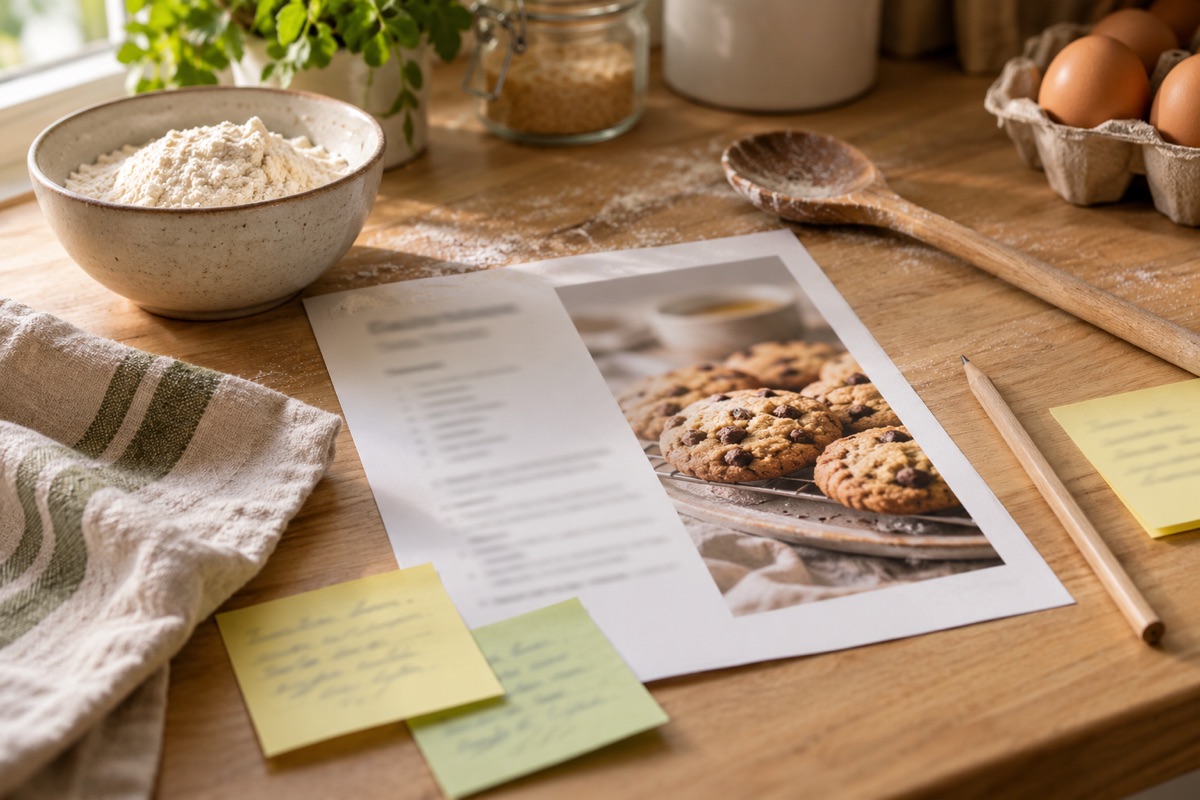
Gather facts before you write
Before drafting, write down only what you can stand behind. That means the recipe’s author and your relationship to them, in your own words, and what you know about when and where it was made, with estimates marked as estimates. Add anything the original card says about serving, occasion or variations, and anything the cook needs to know that the recipe text assumes.
If you do not know where a recipe came from, say so, or leave the source out. “Source unknown” is honest and useful. A made-up origin is not.
Before and after: made-up examples
The two examples below are invented for teaching. The dish, the family and the details are fictional. Do not read them as real family history, and do not copy them into your own recipes.
Before (made-up illustration):
This recipe has been in our family forever and everyone loves it. It’s the best loaf cake you’ll ever have. My great-grandmother made it for every occasion and it was always a hit. Hope you enjoy it as much as we do!
This never says what the cake is like. “Forever,” “best” and “always a hit” are claims no one can check, and the cook gets nothing to act on. A relative is mentioned, but nothing connects her to the recipe.
After (made-up illustration):
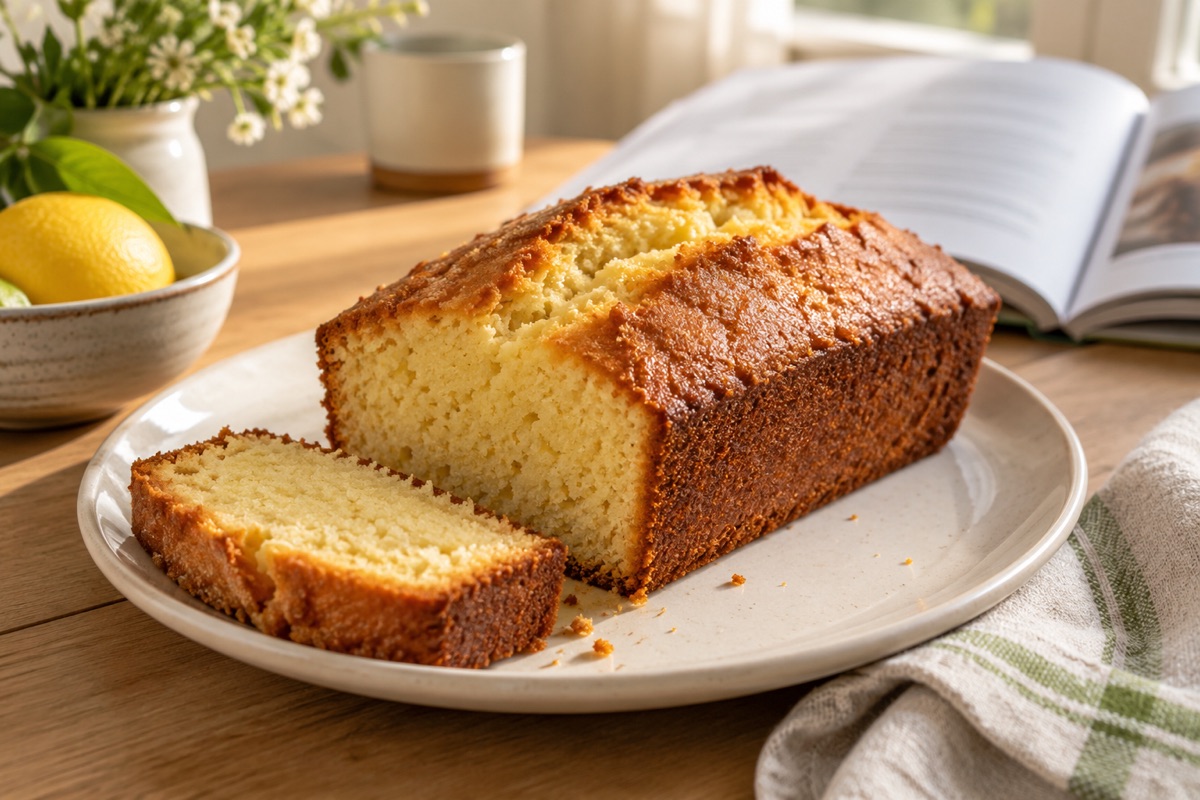
A plain, tender loaf cake with a lemon glaze, sturdy enough to slice thick and mail to a friend. The batter is mixed in one bowl, and the glaze goes on while the cake is still warm so it soaks in a little. The recipe is adapted from a handwritten card. The oven temperature was missing from the card, so a standard one has been filled in and marked in the notes.
The first sentence says what the cake is and how it behaves. The second gives two practical details the cook can act on. The third states the source and says what was edited. It makes no claim about how loved the cake is, because that cannot be shown.
The “after” version is also shorter than a typical story-first headnote. That is deliberate. Anyone who wants more can read a longer note elsewhere on the page.
When you do have a real story
Tell it plainly. A true detail (“she used a dented loaf pan”) beats a general statement (“she loved baking”). Tie the story to the recipe: if it does not change how the reader cooks or understands the dish, shorten it. If it involves another person’s words or private details, ask them first, and quote only what someone actually said, with their agreement.
Never invent a relative, a date or a tradition to give a recipe more color.
Headnote mistakes to avoid
- Opening with weather, nostalgia or a general statement about food.
- Superlatives you cannot back up: “best,” “perfect,” “foolproof.”
- Health or nutrition claims.
- Hiding a key instruction in the story, such as “chill overnight,” without repeating it in the steps.
- Writing a headnote longer than the recipe itself.
- Presenting an adapted recipe as the untouched original.
Check before publishing
Read your headnote and ask:
- Could a stranger tell what the dish is from the first sentence?
- Is every statement either a fact you know or clearly an opinion?
- Does it mention anything that changes how the dish is cooked?
- Have you asked anyone you mention?
If you plan to collect your headnotes and recipes into one volume, how to make a family recipe book covers chapter order and page layout, including where the headnote sits on the page.