
How to Freeze Chocolate Cake and Wrap It Well
Cool the cake completely, wrap it snugly in layers, label it with the date, and thaw it covered. Here is how to freeze chocolate cake whole, in layers or by the slice.
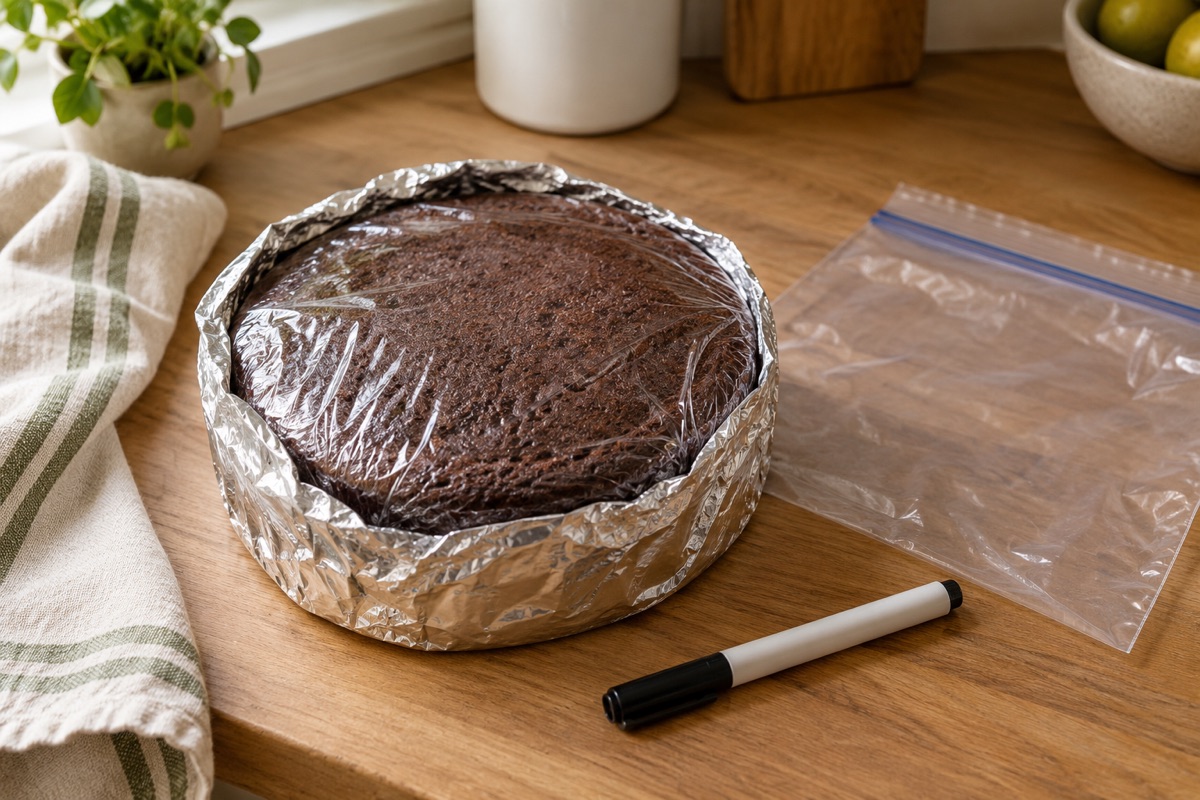
Chocolate cake freezes well when it is cooled completely, wrapped snugly in more than one layer, and labeled with the date. Unfrosted layers and plain slices are the easiest to freeze. Thaw the cake while it is still covered so condensation collects on the wrapping instead of the crumb.
This guide covers a whole cake, single layers and individual slices. It applies to readers in the United States and relies on extension and food preservation guidance last checked on October 4, 2026.
Which cake freezes best
Extension guidance says cakes and cupcakes can be frozen frosted or unfrosted. Unfrosted is simpler, because you can frost after thawing and the frosting stays fresh. A plain oil-based chocolate cake such as wacky cake is a straightforward candidate, and so are layers for a dessert you plan to assemble later.
Egg-white frostings and custard-type or cream fillings are the ones to watch. K-State Extension says egg-white frostings and custard-type fillings do not freeze well. The National Center for Home Food Preservation says egg-white icings turn frothy and weepy after freezing, and cream or custard fillings separate, turn watery or go lumpy.
Soft, pudding-style cakes need a check too. A cake with a spoonable center, like a Meyer lemon pudding cake, has a custard-like structure, so read the recipe’s own storage notes before freezing it.
If a cake has a dairy-based frosting or filling that needs refrigeration, treat it as a perishable food and follow official refrigerator guidance. Freezing does not change what the filling needs once it thaws.
Steps
- Cool the cake completely. K-State Extension says this prevents moisture from condensing on warm food and making it soggy after thawing.
- Decide on the shape: whole, separate layers, or slices. Slices thaw quickly and let you take out only what you need.
- If the cake is frosted, put it in the freezer unwrapped first to harden the frosting, then cover it. K-State Extension gives this so the wrap does not stick to the frosting.
- Wrap tightly, pressing out as much air as you can. The wrapping layers are described below.
- Label with the product, the date and any notes (for example, “unfrosted, 2 layers”).
- Freeze promptly. Freeze foods as soon as they are packed and sealed, and avoid crowding the freezer with a lot of unfrozen food at once.
Containers and wrapping
The freezer is a dry place, and air reaching the cake is what dulls its quality over time. The National Center for Home Food Preservation says freezer packaging should resist moisture vapor, be durable and leakproof, protect against off flavors and odors, and be easy to seal and mark. K-State Extension recommends moisture-proof, vapor-proof wraps or containers: tight-fitting plastic containers, heavy-duty foil, and freezer-weight bags and wraps.
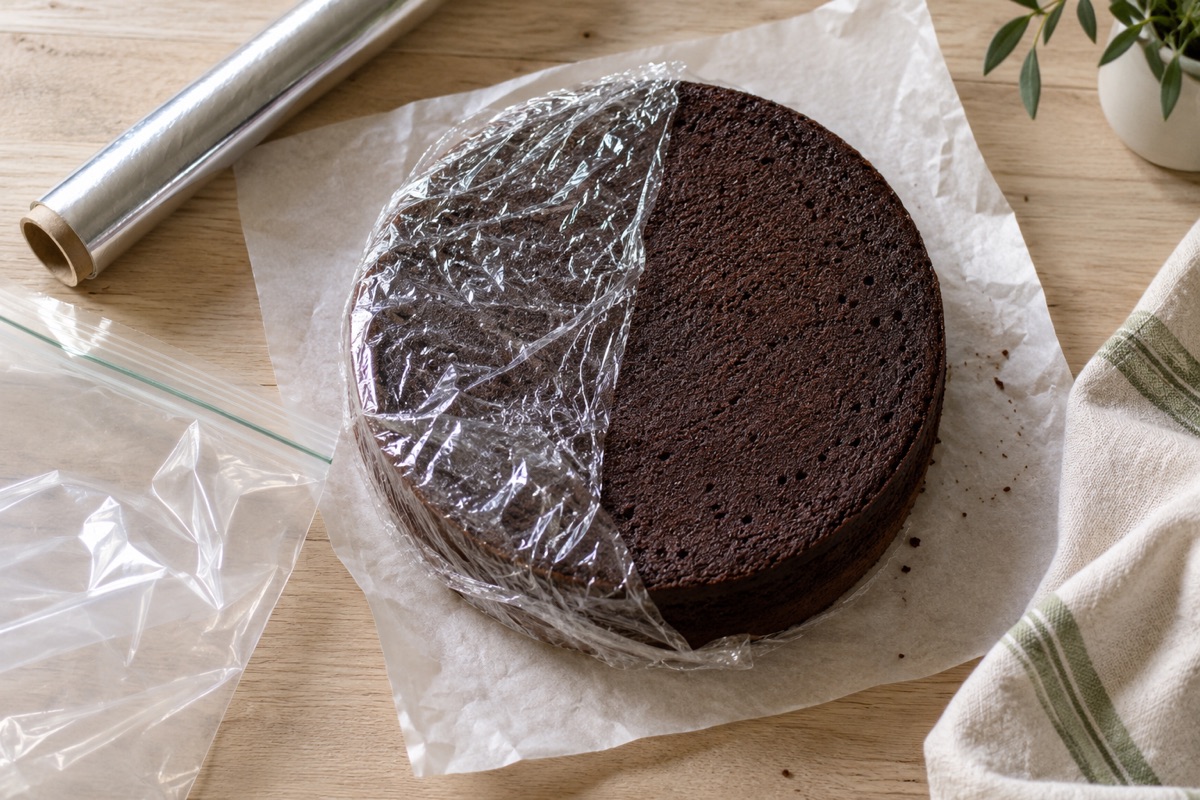
Based on those principles, start with plastic wrap pressed directly against the cake surfaces, with no gaps. Add a second layer of heavy-duty foil or a freezer bag with the air pressed out. K-State Extension also says to put layer cakes in a rigid container to prevent crushing, which keeps frozen slices from breaking when you stack things in the freezer.
For slices, wrap each one separately so you can take out a single piece. Stack the wrapped slices in a lidded container and write the date on a strip of freezer tape.
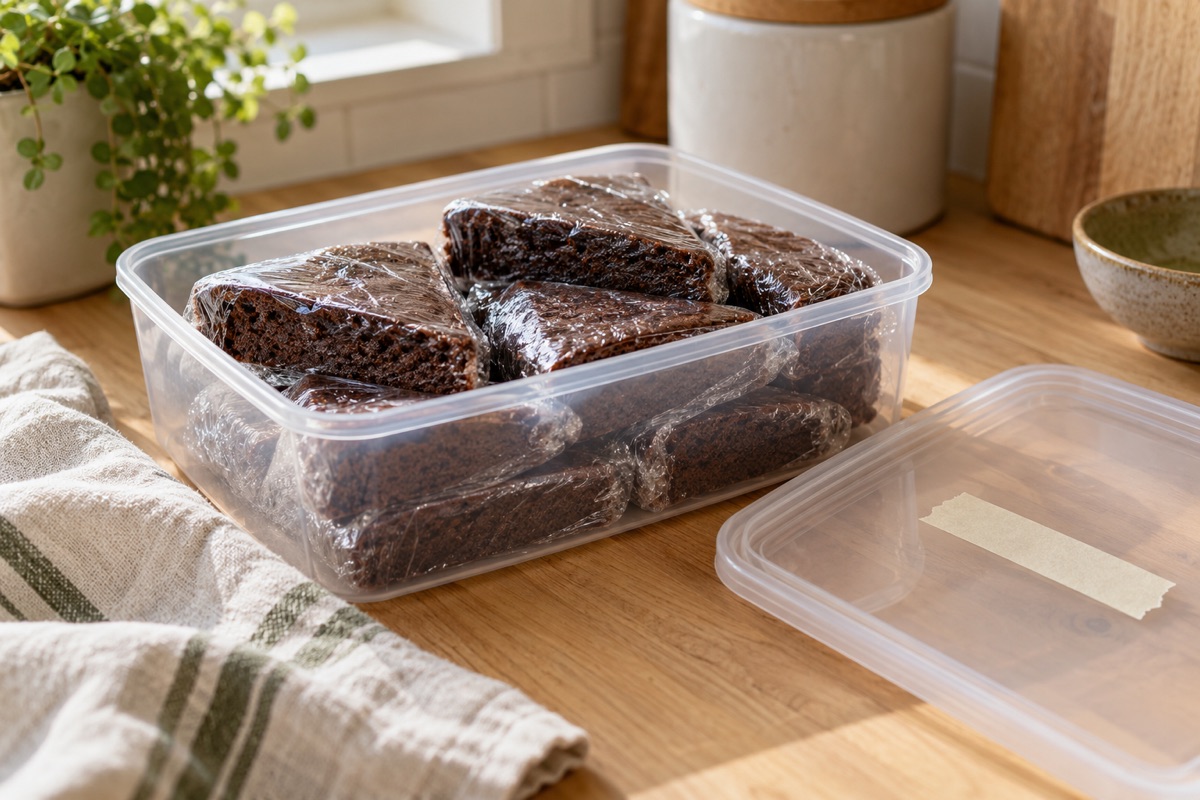
Airtight containers and vacuum sealing work differently. Vacuum sealing can crush soft cake, so a rigid container is the gentler option for layers and slices.
Safety, quality and texture
Safety first. FoodSafety.gov says freezer storage guidelines are for quality only, and that food stored continuously at 0°F or below can be kept indefinitely. K-State Extension also gives 0°F or lower as the freezer temperature. Time limits for cakes are about quality, not safety.
K-State Extension’s table lists up to 6 months for unfrosted cakes and cupcakes and up to 3 months for frosted ones. Those figures come from one extension handout and are meant to help the cake keep its flavor and freshness. Treat them as a planning aid, not a safety deadline, and date the package so you can use older cakes first.
Frozen cake can be a little drier or more crumbly than fresh. This is general guidance rather than a test result: moisture-rich cakes and tight wrapping tend to hold up better than loose wrapping.
For a cake without perishable filling, room temperature is the usual choice for short-term serving. If the frosting or filling contains dairy or eggs that need to stay cold, keep the cake in the refrigerator and follow the official guidance linked below.
Thawing and reheating
K-State Extension’s guidance for cakes is to thaw an unfrosted cake covered for 2 to 3 hours at room temperature, then frost or serve as the recipe directs. A frosted cake should thaw loosely covered overnight in the refrigerator.
Leave the wrapping on during thawing. For a cake with a perishable frosting or filling, thaw in the refrigerator rather than on the counter. The National Center for Home Food Preservation says food that begins to defrost and warms above 40°F lets any bacteria present multiply, and it advises never thawing food at room temperature or in warm water. That advice is written for perishable foods in general, so a cake with dairy frosting should follow it. When in doubt, thaw in the refrigerator.
If you want warm cake, heat a slice briefly after it has thawed instead of warming it from frozen. Follow any reheating directions that came with a bought cake.
Common questions
Can I freeze a cake that is already frosted? Yes, according to K-State Extension. Harden the frosting in the freezer before covering the cake, avoid egg-white frostings and custard fillings, and thaw it overnight in the refrigerator.
How do I stop freezer burn? Freezer burn is dryness caused by air reaching the food. Limit air with tight wrapping, a second layer and a sealed container, and use freezer-rated bags or wraps rather than thin ones.
Does a cake still have to be eaten within the quality window? No. The window is a guideline for quality. If a cake has been kept frozen but has dried out or lost flavor, it may be less pleasant, but that alone does not tell you whether it is safe. Texture and flavor are never safety tests.
What if the label on a bought cake says something different? Follow the label. Product instructions take priority over general guidance.
Official guidance and review date
This guide was reviewed on October 4, 2026 and applies to the United States. It draws on K-State Research and Extension and the National Center for Home Food Preservation at the University of Georgia. For refrigerator and freezer time and temperature charts, see the FoodSafety.gov cold food storage chart, which is also linked in the food safety note below. Where those sources and a product label differ, follow the label.
Official guidance and sources
Sources last checked October 4, 2026.
- Freezing Baked Goods , K-State Research and Extension, Ellis County (accessed October 4, 2026) Cooling, wrapping, thawing and quality-based storage guidelines for cakes.
- Packaging and Labeling Foods , National Center for Home Food Preservation, University of Georgia (accessed October 4, 2026)
- Foods That Do Not Freeze Well , National Center for Home Food Preservation, University of Georgia (accessed October 4, 2026)
- Thawing and Preparing Foods for Serving , National Center for Home Food Preservation, University of Georgia (accessed October 4, 2026)
- Cold Food Storage Chart , FoodSafety.gov (accessed October 4, 2026) Used for the statement that freezer time guidelines are for quality and that food kept at 0°F or below can be kept indefinitely.