
How to Package Cookies for Gifts
Cool the cookies fully, separate layers with parchment, fill every gap, and match the container to the trip. A plain guide to wrapping homemade cookies as gifts.
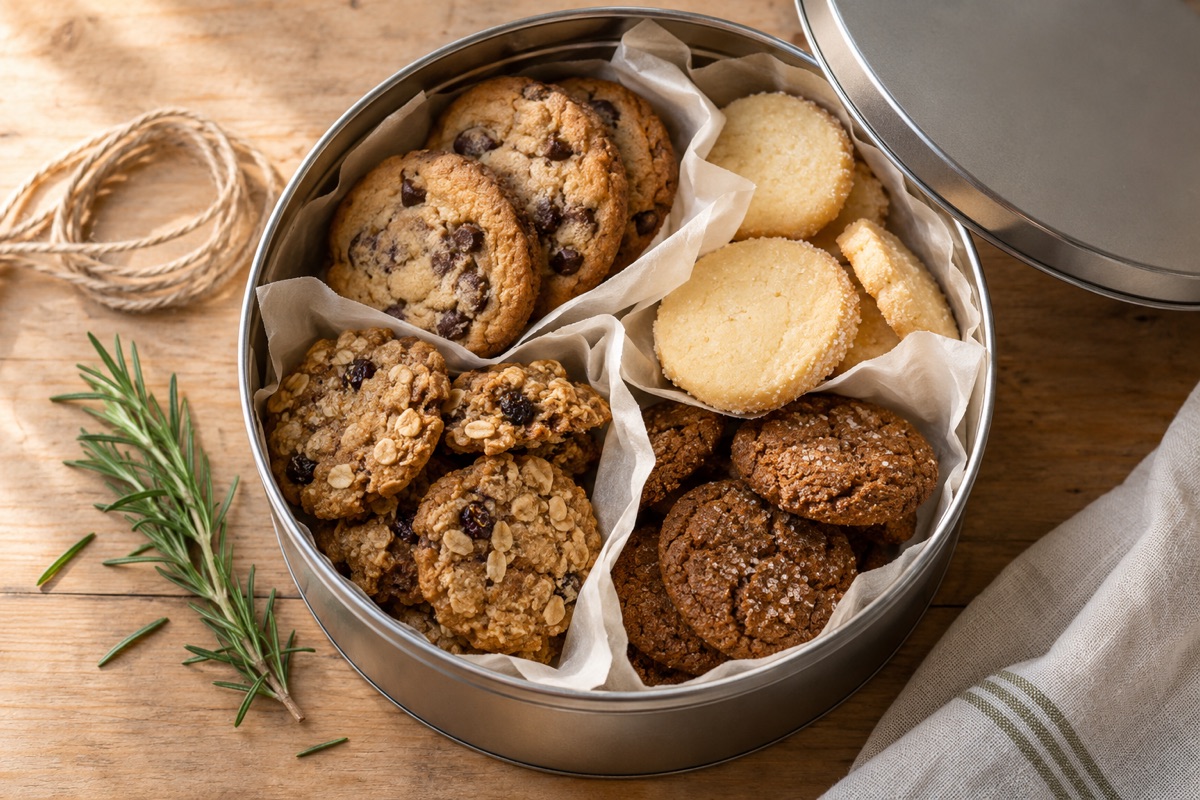
A good cookie gift has three parts: cookies that are fully cooled, a sturdy container with no empty space, and a layer between the cookies so they do not scrape or stick. A tin or a rigid box with parchment between layers handles most trips across town. Mailing needs more care, and the choice of cookie matters as much as the wrapping.
This guide is for gifts you make at home and give away. If you plan to sell cookies, the questions change; the planning checklist for packaging cookies for sale covers that separately.
Start with the right cookie and a full cool-down
Some cookies simply travel better. Extension guidance on mailing baked goods says firm, crisp, dry cookies that are not too thin should be all right, while delicate sugar cookies and pastries probably will not arrive in one piece. Soft, moist baked goods, including soft cookies and bars, are more prone to mold, so they suit a hand-delivered gift better than a mailed one.
Let cookies cool completely on a rack before packing. Warm cookies release steam inside a closed container, and that moisture softens crisp cookies and makes sticky ones stick together. If a cookie is still slightly warm at the center, wait.
Heat matters in transit too. Cookies made with real chocolate can soften or melt if the gift is going somewhere warm, so plan the timing and the destination before you bake.
Choose a container for the trip
Pick the container by how far the cookies must go and how fragile they are.
- Metal tin: rigid, stackable and reusable, a good default for gifts delivered by hand or sent a short distance. A tight lid helps slow the loss of crispness.
- Rigid cardboard box: light and easy to decorate. It protects better than a bag but less than a tin, so add a liner and snug filler.
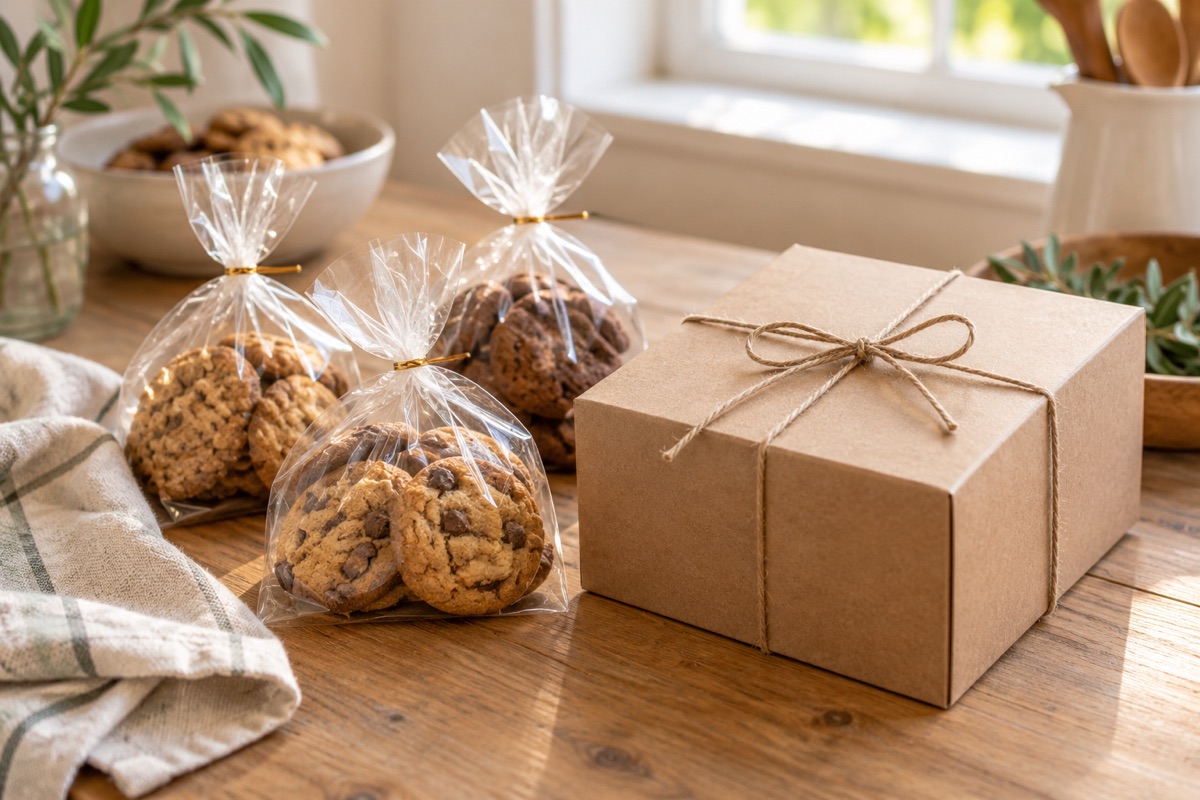
- Small cellophane or paper bags: fine for a few sturdy cookies handed to a neighbor, less suitable if anything will be stacked on top of them.
- Reused containers: coffee cans and similar cans with resealable lids can work. Wash and dry them thoroughly, and keep in mind that anything that touched food before must be clean and suitable for food contact again.
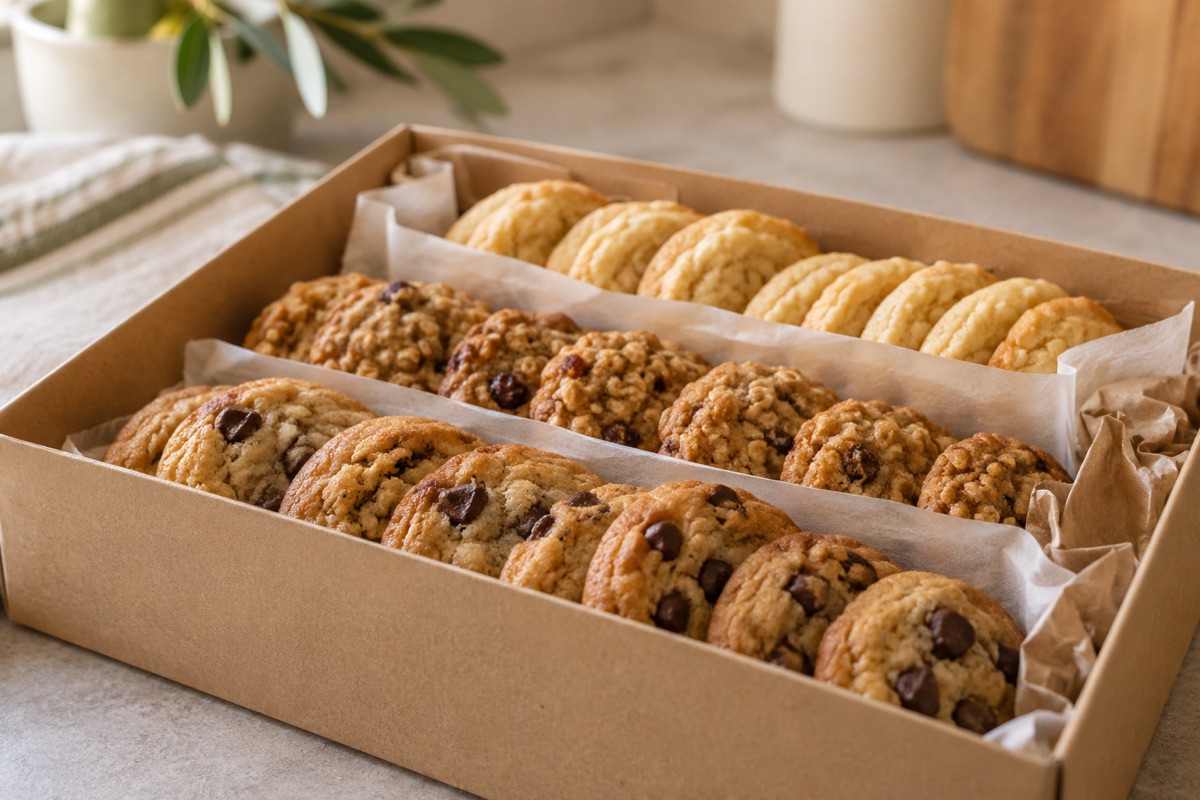
Layer, wrap and fill
The aim is that nothing can move. Follow the same order each time.
- Line the container with parchment, wax paper or foil. Extension guidance suggests foil or plastic wrap as a liner.
- Wrap cookies in pairs, back to back, if they are the type that can scratch each other, such as decorated or textured cookies.
- Put the heaviest, sturdiest cookies on the bottom.
- Lay a sheet of parchment over each layer.
- Fill gaps along the sides and on top with firmly crumpled wax paper or plain unsalted, unbuttered popcorn. Both are named in the extension guidance.
- Close the lid and give the container a gentle shake. If you hear or feel movement, add more filler.
Keep strongly flavored cookies, such as ginger or mint, apart from mild ones, or wrap them separately so aromas do not travel from one to another.
Finishing touches that stay food safe
Plain kraft paper, string and twine are all simple finishes. Keep decorations on the outside of the container. A sprig of fresh herbs or a printed card is fine on the outside of the box, but loose items inside should not touch the cookies directly unless you know they are meant for food contact.
The FDA describes a food contact substance as a substance that comes into contact with food and includes food packaging and its components, along with adhesives, colorants and similar items applied to packaging surfaces. Commercial food packaging goes through a review process for this reason. For a home gift, the practical lesson is to use materials made for food, such as parchment, wax paper and food-grade bags, for the layer that touches the cookies. Be careful with dyed tissue, craft paper of unknown origin, or anything that sheds fibers or color.
Tell the recipient what is inside
A gift of food should come with a short note. Write down the kind of cookie, the date you baked them, and the main ingredients, including anything that is a common allergen. The FDA lists nine major food allergens in the United States: milk, eggs, fish, crustacean shellfish, tree nuts, peanuts, wheat, soybeans and sesame. A note that says “contains walnuts and wheat” can matter a great deal to the person opening the tin.
If you do not know whether the recipient has an allergy, ask before you choose the recipe, or keep the cookies simple. Gifts that go to children, schools or offices are a good reason to be extra clear.
If you are mailing the gift
Choose the fastest delivery option you can. Extension guidance recommends one-day delivery where possible so the food stays fresh. Place the packed tin or box inside a larger shipping box with more cushioning around it. Avoid sending soft, moist baked goods, anything perishable, and anything that needs refrigeration, and avoid mailing cookies that contain chocolate in hot weather.
Rules for sending food across state lines or abroad can differ, and carriers have their own conditions. Check the carrier’s current rules before you ship.
After the gift is delivered
Ask the recipient to keep the cookies in the container they arrived in with the lid on, and to eat soft cookies sooner than crisp ones. For storage guidance, see how to store cookies for soft and crisp batches.
Quick checklist
- Cookies are firm, dry and completely cool.
- Container is clean, dry and sturdy.
- Parchment or wax paper between layers.
- Heaviest cookies at the bottom.
- No empty space; the container does not rattle.
- A note lists the cookie type, the bake date and common allergens.
- Delivery is as fast as you can arrange, and chocolate cookies are kept out of the heat.
Sources
- Can I safely ship homemade bread, brownies, cookies? , Ask Extension (Cooperative Extension) (accessed October 4, 2026) Which baked goods travel well and how to pack and fill a container for mailing.
- Food Packaging & Other Substances that Come in Contact with Food - Information for Consumers , U.S. Food and Drug Administration (accessed October 4, 2026) Defines food contact substances, which include packaging and its components.
- Food Allergies , U.S. Food and Drug Administration (accessed October 4, 2026) Lists the nine major food allergens recognized in the United States.